
 Apple Podcasts
 Spotify
 iHeartRadio
 Audible
 YouTube
 RSS Feed
 Organic Isn't Dead, You Just Stopped Talking to People – with Dorien Morin-van Dam
People keep writing obituaries for organic content. And every time, communicators chase the paid shortcuts instead of doing the work. Now, as AI-generated content floods every platform, those who abandoned organic are realizing they have nothing to fall back on.
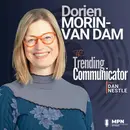
In this episode of The Trending Communicator, host Dan Nestle sits down with Dorien Morin-van Dam, owner of More in Media and host of the Strategy Talks podcast, to dig into whether an organic-first philosophy can survive the AI era. With over 15 years of experience in community building and social media strategy—plus an Agile Marketing certification—Dorien has spent her career defending organic content not as nostalgia, but as strategy.
From the early days of Facebook groups in Myrtle Beach to Reddit brand management and the community-first model flipping the old course-then-community approach on its head, Dorien and Dan explore what systematic approaches to content actually look like when everyone has access to the same generative tools. They dig into why brands that leaned too hard on AI are already feeling the reckoning, and why live content may be the last frontier that nobody can fake.
Listen in and hear about...
- Why community is the ultimate expression of organic strategy
- The shift from course-first to community-first business models
- How community content is reshaping brand reputation and AI search visibility
- Why live content is the new competitive moat against AI
- The difference between being creative and becoming a creator
Notable Quotes from Dorien Morin-van Dam
"Anything that you don't pay for is organic. So if you're still talking to people, organic is not dead."
"If you have a thought in your mind, you wake up at 4am and you think about something in your business—that is a LinkedIn post. That is something that AI can't do."
"Creating something because you think it's a good business opportunity—creating a community around that, it's going to tank because you're not authentic."
"That's the last frontier. You can't copy me live. You can make an AI avatar, but you're not going to have my thoughts live unless I'm there."
"The worst strategic mistake that you can make is trying to be something that you're not. And that's the downfall—we're seeing people using AI improperly, and it's all crumbling down."
Resources and Links
Dan Nestle
- Lilypath | Website
- The Trending Communicator | Website
- Communications Trends from Trending Communicators | Dan Nestle's Substack
- Dan Nestle | LinkedIn
Dorien Morin-van Dam
Timestamps
0:00:00 Organic Content’s “Death” and Industry Shifts
0:05:40 Early Days of Community Building and Facebook Groups
0:12:27 Reddit Community Management and Brand Authenticity
0:19:59 Evolution of Community Strategy and Content
0:24:47 Starting and Growing Communities: Goals & Authenticity
0:30:10 Brand Support, Community Catalysts, and Influencer Dynamics
0:36:27 Community vs Followers; PR, Marketing, and Strategy Integration
0:42:20 C-suite Ownership of Origin Story and Business Strategy
0:49:28 Connecting Community Leadership with Target Audience
0:56:08 Life Experience, Conflict Management, and Community Leadership
1:00:28 Human Creativity vs AI; Going Live and Authentic Engagement
1:06:40 Final Advice: Authenticity, Building Sustainable Communities
(Notes co-created by Human Dan, Claude, and Castmagic)
Learn more about your ad choices. Visit megaphone.fm/adchoices
00:00
Daniel Nestle
Welcome or welcome back to the trending Communicator. I'm your host, Dan Nestle. I've lost count of how many times organic content has been declared dead. Every algorithm change, every new pay to play feature, every platform pivot, and the obituary start flowing. Organic reaches over. You gotta pay to play. Earned media is a relic, you know. And every time I've watched communicators abandon ship. They close their accounts, they chase the page shortcuts, they outsource their authority to algorithms that they'll never control. But here's what I keep coming back to. If you can't earn attention, you can't defend against invisibility. If you won't create and publish, you can't build authority. There's no shortcut to that, and there never was. And now we're watching something interesting unfold.
00:57
Daniel Nestle
As AI generated content floods every platform, as synthetic engagement becomes indistinguishable from real interaction, the people who abandoned organic are discovering that they have nothing to fall back on. When everything can be manufactured, the premium isn't on what's amplified, it's on what can't be faked. While today's guest has spent over a decade at as an unapologetic defender of organic content, not as nostalgia, but as strategy. While the industry pivoted hard toward pay to play, she doubled down on the unglamorous work of community building and authentic engagement. But here's what makes her really interesting to me. She's not a Luddite. She holds an Agile Marketing certification, applying engineering style process optimization to creative workflows. She's embraced AI not as a replacement, but as an accelerant.
01:46
Daniel Nestle
And she hosts a weekly strategy podcast, Strategy Talks, where she's systematically mapping how the best practitioners are navigating this exact tension. Her trajectory reads like a series of strategic pivots, from managing communities for agencies to consulting with international brands, from tactical execution to teaching other strategists how to work more efficiently without burning out. She operates from rural Vermont while serving clients globally, which tells you something about the model she's built. So we're going to dig into whether the Organic first philosophy is sustainable in the AI era and what systematic approaches to content actually look like when everyone has access to the same generative tools.
02:26
Daniel Nestle
So, making her debut on the trending Communicator, someone who's been defending organic strategy while the rest of the industry has chased shortcuts and who might have cracked the code on systematizing authenticity without killing it, the owner of Moran Media, host of Strategy Talks, my friend, Doreen Morin Van Dam. Doreen, how you doing?
02:50
Dorien Morin-van Dam
Good.
02:50
Dorien Morin-van Dam
Wow. I'll tell you, that was a mouthful. That was awesome.
02:55
Daniel Nestle
That's the reaction I'm looking for. But like, you know, it is a mouthful. And, and again, I'll, I will confess to my listeners that the version that you hear is not going to be exactly the version that Doreen just heard because, you know, I have to go back a little bit. But you know, it's true. This whole thing about where you know, about chasing content, about content marketing, content development. And I have to say that the comms world, you know, should have really embraced content marketing principles from day one, and they are now. I mean, of course, like a lot of what comms does is essentially a type of content marketing or its content marketing methodology for different audiences and different purposes sometimes, but the basics remain the same.
03:42
Daniel Nestle
But David Meerman Scott put out the new rules of marketing PR almost defined content marketing and whatever, almost 25 years ago. And I read that book then, haven't turned back. Content's always been central to my, well, to my life and to my professional life. Sometimes to the exclusion of other things and not to my benefit, you know, but I, I just love the idea of good crafted, well crafted writing and design and how that really makes connections with people. And I don't think you can, you know, you can buy your way into that necessarily. Right. But, but you know, it's an important part of strategy and that's why you're here. So, Doreen, how you doing? What's happening? What's going on in your world?
04:37
Dorien Morin-van Dam
I am great. I'm great, man. It's like 15 years of histories driving by. You know, as you're talking, I did start out very much hands on local. I was living in South Carolina at the time and it was hands on. Helping small local businesses get found by 20 million visitors to Myrtle beach, which is where I was living, and of course by the locals. And that was a lot of grassroots type marketing stuff that were then applying to social media. Right. We were using social media to amplify the things were doing out in the field. That's really the start. 15 years ago, 2000.
05:14
Daniel Nestle
It wasn't an SEO play. You're talking about organic content.
05:19
Dorien Morin-van Dam
Organic content, yeah. And then getting the wins and seeing the, you know, the kind of, the rise of the communities at that point.
05:29
Dorien Morin-van Dam
I always use this as an example. There was a local realtor who, when Facebook groups first came out, created a Facebook Group. And at that time, you could still name your Facebook group after your local community. So it was like myrtlebeach.com community and the realtor owned it and it became huge. Everybody wanted to relocate to Myrtle beach, found the group, and they allowed everybody to talk about, you know, if you need a plumber, if you need a contractor, if you need this, that, but if you needed a realtor, that was theirs. And so the leads were. It was brilliant, right? That was my first experience with, you know, watching the community being built, being in the community. Of course, I was able to be in the community as a social media manager.
06:12
Dorien Morin-van Dam
But seeing that ownership of the community and how they build it and how they got the leads kind of opened up that world of, you know, what else can we do? Because that was basically taken offline community building skills to an online community. And that's where I watched it for the first time in Facebook groups and was super effective. And then going, you know, then jumping into B2B and then, you know, community management. I did that as a main thing for maybe four or five years. And it was still content management, right? You still, you talk to people, you get content from them, you use that to create more content. Frequently asked questions during a community, you're getting feedback about your product, your services. And so it's all kind of work together.
06:56
Dorien Morin-van Dam
And every time somebody says organic debt is that, I'm like, are you still talking to people? If you're still talking to people, organic is not dead. Anything that you don't pay for is organic. So you go to TikTok. Yeah, there's ads on there, but a lot of it is organic. You go to Instagram, there's ads on there. A lot of it is organic, right? You're still, you know, if you have a Slack channel that's organic, you know, if you have a discord community, if you're any of that is you having conversations, is creating organic content. And with those conversations, you can create more content that's visible to the public, that you want to draw in so it's not dead. And it's more and more important to have those real conversations and to focus on organic because of AI.
07:42
Daniel Nestle
Yeah, I mean, I think that the reason, or one of the main reasons why folks are quick to start singing the funeral dirge of organic is simply because AI is writing it and it's flooding and flooding the airwave, so to speak, the digital channels. And I take it as the complete opposite. Meaning where it's. Where it's actually far more important to be truly organic. And let's just say. Let's just say, like, organic can mean a lot of things. I mean, apart from the overall category of you don't pay for it. You know, it's like it's something that you know, it's something that's. You write or produce. You put it out there and you're not. You're not paying anything to boost it, you know. But do you count AI content as organic? I mean, I guess from a. From a.
08:34
Daniel Nestle
From a process standpoint or like a, you know, a methodology. From a. From a categorization standpoint, probably. Right. Because the content itself.
08:42
Dorien Morin-van Dam
Sure.
08:43
Daniel Nestle
But there's something very inorganic about the way organic content is being created by AI. Right. So therefore, those of us who are, like, very human and authentic and, you know, keep that community, feel like, understand what that is. You know, actually there's a call for more of that kind of quality and that kind of craft and that kind of artisanship and connection and storytelling. All, you know, all of the. All the things that's going to rise above the river of quasi organic AI crap. You know, I don't even think we're starting to see that and starting to realize it. But it's interesting that you start talking about community back when, you know, the early Facebook groups, and there's still a few hanging out, hanging in there. Right. I mean, I'm still a member of a few and, you know, I check them out.
09:41
Daniel Nestle
Actually, it is the only reason I ever go to Facebook. Now. I do not. Do not go to Facebook for any interaction with people other than who are in my groups or in my messaging.
09:51
Dorien Morin-van Dam
Yeah, I think the groups that really still work very well, just in case somebody's watching, listening, and is thinking, oh, I haven't been to Facebook for a while. Local community, especially in rural communities. So I'm in rural Vermont. I'm right outside of Killington. The Facebook groups still really help reach the right people because it's. People choose to be in those groups because they want to know what's going on locally. So whether that's Killington and want to know about the mountain and skiing or. Or it's a little town. I live in Pittsfield.
10:19
Dorien Morin-van Dam
I want to know what's going on.
10:20
Dorien Morin-van Dam
With the library or the local, you know, food pantry.
10:25
Dorien Morin-van Dam
They.
10:25
Dorien Morin-van Dam
They join those communities for that. So local. Local Facebook groups do really well. And then specialty, medical, specialty, and hobbies are doing really well. If you know, have a certain diagnoses and you want to know about that, those medical groups, mental health groups, and then hobbies, crocheting, knitting, you know, arts and crafts, fixing furniture. A lot of those communities do still really well on Facebook because you get a much wider range because as the locals are small, those will draw.
10:59
Dorien Morin-van Dam
In people from all over the world because anybody can join that group.
11:02
Dorien Morin-van Dam
Even if you live in Africa, Asia, South America, Europe. Right. So those two, those categories I think.
11:10
Dorien Morin-van Dam
Still really serve a great purpose.
11:11
Dorien Morin-van Dam
And if you are a brand that owns one of those groups, oh yeah, you know, you're going to be able.
11:18
Dorien Morin-van Dam
To do some amazing things.
11:20
Daniel Nestle
The collectors, like people who collect things are nuts. They're nuts on Facebook. You know, I belong to one or two of those and different character, different groups and they're very, very community run. They don't like brands stepping in and running, but they love when brands participate. And you know, what a great opportunity for marketers and for communicators, really, because you're going in there, you have to be real, you got to be authentic. You're not going in to sell anything. You're going in to build reputation and authority for your brand and make fans. Right.
11:56
Daniel Nestle
But it's fascinating to me how the brand owned communities, I'm sure they still do really well, but it's the grassroots driven, you know, communities, or even better, when a brand turns it over to the crazy fans and lets them run the show, you know, like, you know, then you honor people by making them moderators and so on, you know.
12:22
Dorien Morin-van Dam
Right.
12:22
Daniel Nestle
Yeah.
12:23
Dorien Morin-van Dam
And then we're not, we haven't even touched on Reddit. I mean, Reddit is, you know, there's community management there. I've gotten several requests to check out Reddit and you know, put in proposals in the last few months for, you know, how can we leverage Reddit? And really comes down to is if you're a brand and you want to be found or seen or make an impact or get your, you know, PR push or get you know, seen by the LLMs on Reddit. You have to be authentic. You have to be on there as a brand. You can't buy a bunch of influencers.
12:56
Dorien Morin-van Dam
You, you've got to have a strategic plan to be on there and have a dedicated community manager as well as at least one or two dedicated experts of your brand, your product, your service, who can answer questions in real time along with you. So you would have, say, Q and A sessions as the brand, but when questions come up that one of your experts can answer, say it's a veterinary clinic and Somebody's asking about dog food, while you as a community manager can't answer, do that. But if you have a veterinary tech that is going to be part of that team, you could say, hey, you need to answer this. And then it becomes, then you as a community manager can help that process along. But that's a long game. Again, but that's a whole new way to use communities to be found.
13:45
Dorien Morin-van Dam
And it's just amazing, all the different opportunities. And again, that's organic.
13:51
Daniel Nestle
It's organic and a lot of it's grassroots. Some of these communities have been going on, especially on Reddit. I mean, if somebody has a beef, there's a new Reddit group. I mean, it's like, period, right? And, you know, a lot of brands are finding out that there's been, there have been all these discussions happening for years on Reddit.
14:12
Dorien Morin-van Dam
They weren't part of them, they weren't part of it.
14:14
Daniel Nestle
They didn't know about it, they didn't care about it. And all of a sudden they're seeing in, you know, in generative search, AI search, answer engine search, pick your terminology. We're not, we're still not settled, I think, as an industry on that. But in generative search, you know, some of the LLMs have said, okay, we're not going to pay that much as much attention to Reddit, but it's still there. And they're seeing things like, you know, well, you can go to this brand which is, you known for this, this and this brand's known for this. This brand has a reputation issue that, you know, had a conflict with something, and the brand's like, what reputation? What are you talking about? Questions about quality.
14:57
Daniel Nestle
You know, I worked for a major global, let's say, bathroom and kitchen fixtures brand, and you have sat on the product, you have faced the product. According to our estimates. I mean, everybody in America certainly has had an experience and interaction with our products. The brand that were in charge of, that we owned, was called American Standard. And you might have heard of them. Geo comes out, Search comes out. And I haven't spoken with my former colleagues there about this, but when it came out, I remembered that when I had done some monitoring when I was working there, I discovered why. Why are there 1500 mentions in Reddit in the last six months? And the customer experience team is like, read what you know. And I'm not, I'm doing, not doing them any favors.
15:56
Daniel Nestle
They, they kind of were aware, but There was a faulty, like a very simple faulty valve somewhere, which happens in mass, you know, when you mass produce things. Company was doing a fine job of taking care of it, but the people on Reddit, they just wanted to about it, right. And they wanted to say bad things because negativity, you know, kind of breathes negativity. Yeah. So I, I don't know what the end, what the outcome is now on, on the LLMs, but I'm sure that if I look for American Standard on or like bathroom toilets or whatever, then there's there could be some, you know, kind of negativity in honest, unbiased, like AI style answers that say, well, American Standards is a legacy brand. But you have to remember that there's been some issues with this and don't want to see that.
16:49
Daniel Nestle
Nobody wants to see that.
16:50
Dorien Morin-van Dam
No, no. If you're watching and listening to this, you know, make sure you have mentions on Google alerts, all of those things. Go check out Reddit. You know, always keep a finger on the pulse on what people are talking about. You want to do social listening. That's part of organic social media is social listening. So you know what people are saying about your brand, your industry, your specific product or service and what other people are offering. And you know, there's plenty of examples out there where competitors step in, right? So say it's a brand name. Somebody, you know, they post something and underneath is a disgruntled customer and says, hey, your product wasn't working, I've tried to reach you, blah, blah, or you know, I bought this product, but it's not doing.
17:34
Dorien Morin-van Dam
If you're not answering but another brand is listening and they go below and say, you know, they're helpful, then they.
17:45
Dorien Morin-van Dam
Can steal your people.
17:46
Dorien Morin-van Dam
Like be helpful, be there, be present. So there's huge opportunity there. And yeah, if you're doing organic social, you have got to also do the listening because they work hand in hand.
17:59
Daniel Nestle
Yeah, it's the no cost swoop. They can swoop in, you know, take your market share and swoop right out, you know. So we've been talking about a couple of things so far that just remind me like were talking about this. You mentioned early Facebook groups. We're talking about almost this exact same stuff. There was no mention of AI, of course, but it was the same shit, different day. Like, I've been increasingly convinced that there's so many things that are cyclical that things, everything old is new again that go back to the 2003 version of the new rules of marketing PR. And some of them are going to be the new rules for a lot of people because it just keeps coming back.
18:40
Daniel Nestle
So when you talk about community management from those days and now we have a kind of, the nuance is a little bit different, but a big, huge call to get involved in community or to build your own community or to have a community as a brand or as an individual or, you know, as an interest group. Because those are where you have people who are not motivated by anything other than shared interest, shared purpose. Right. So there's no like, there's generally no like externality, no material motivation necessarily. They're not in there to get deals and bargains. Sometimes they're in there to trash talk, but that's a different story. So, you know, but the platforms have changed a little bit. But how do you think that community feel has evolved and how has the community manager evolved? Had to evolve with this.
19:37
Daniel Nestle
And I'll add one point to this. Your podcast strategy talks, your content strategist, right? What does all of this mean to strategy? And we can kind of maybe address that in order if you'd like. You know, how have communities changed? How has that role of managers changed? And how does this ladder up to strategy?
19:59
Dorien Morin-van Dam
So that's a really great question. The community strategy has changed that. Initially, I think communities were built because people wanted to be with like minded people and as the world was opening up with social media. Because initially 2011, when I became a social media manager, I became on social media as an individual. I grew up in Europe, I moved to the U.S. i'm an immigrant. The social media opened up the world to go back to where I came from. So instead of being in my community at that time, I was living in Philadelphia and then Myrtle Beach. Instead of just connecting with people there, it opened up opportunities, the world to me. So I was in a community to network and then to meet local people, to meet people everywhere else.
20:47
Dorien Morin-van Dam
So the strategy there was to just build, I think as a community manager, we built. It was a numbers game. At least that's what I saw. And then if you were a brand that owned it or a business owner that owned it, you had to kind of strategize and figure out, can I make money off of this? And initially it was just selling a product. You know, maybe you were. There was a local group years ago that was a lady who sold elderberry syrup, you know, and she had this wellness mama group and she was delivering elderberry. But everybody came in the group because she also did lives and she made it fun and she provided all this.
21:26
Dorien Morin-van Dam
Great content, but then she sold elderberry syrup and she delivered to your house when your kids were sick. So brilliant, right? So she figured out how to sell in her group. So now the.
21:38
Dorien Morin-van Dam
You know, when I talk to brands.
21:39
Dorien Morin-van Dam
Who want to have a community, it's.
21:41
Dorien Morin-van Dam
Usually built around either their brand or.
21:45
Dorien Morin-van Dam
A side program of their brand so.
21:51
Dorien Morin-van Dam
That like a subdivision.
21:52
Dorien Morin-van Dam
So like, I'm thinking about, you know, I'm kickstarting a community myself about four strategy talks for, you know, people who listen to the podcast, who want to learn more about content marketing. And for all my guests that have been on my podcast, right, over 160 plus guests, if they, oh, if I can bring everybody together, then we can continue the conversations, right?
22:13
Dorien Morin-van Dam
So my strategy around that is that I want to connect people. I want to be the connector. And eventually I've had.
22:22
Dorien Morin-van Dam
So one of the ways I can make money right in my community would be to teach people how to podcast. Because I have four years of experience.
22:31
Dorien Morin-van Dam
How to do a video podcast, specifically.
22:34
Dorien Morin-van Dam
Because that's what I do. One of the biggest changes that I've seen is in how we sell and what we sell. And that has to do with communities. Years ago, people were selling courses. They would spend six weeks creating a course. They'd sell the course first, and then you take the course. A lot of people wouldn't take the course, and then they try to build a community. So about four or five years ago, these platforms where you can host your courses would also add a community. What we're seeing now is the reverse. We're seeing community building platforms where you can also sell pieces, for example, school circle, that allow you to create that community, built that first, but then on that same platform, sell you a course, offer a product, offer a service, right?
23:25
Dorien Morin-van Dam
Give a free ebook, or, you know, start selling if you want. So they kind of reverse that order. Instead of community as an afterthought, they're saying, you got to start with community. Which is also when we think about, you know, I just had this conversation last night at book club with my friends about influencer marketing. Like they said, how can, how do people make money as influencers? How does a 24 year old, I'm like, they do it because they have a platform, they have a community, right? You have a stand, you take a stand. You are X, Y, Z, or you think this way about something. And once you have a platform, you grow this community. You get people behind you Then you can sell something, then you can work as an influencer, then you can have businesses pay you.
24:09
Dorien Morin-van Dam
So the same happens with a community if you're, whether it's your personal brand or it's your podcast or your business, if you build that community and you build trust, you give away a lot of stuff. You're present, you listen, you improve your products and services based on the feedback that you get. You create content based on the feedback that you get from people who are, you know, current, past and potential customers. You're going to improve all of your content, but you're also going to built a trust with them that you're really listening.
24:46
Dorien Morin-van Dam
So that is the piece of the strategy. As I see the, you know, people using communities in different ways, if somebody says I want to start a community, I'm like, well, what do you want to do? You want to start a community or do you want to sell something? You start a community because you want to create better content or do you want to start a community because eventually you want to sell a product? You want to start a community because you want to grow your network and show the world what you can do, or do you want to network and connect to like minded people? So say you're on a speaker platform and you want to connect with fellow speakers.
25:19
Dorien Morin-van Dam
You just want to do it because when you go out into the world and you speak, you go to conferences and you want to have this community of speakers, you know, so knowing your goal before you really set up the community will also allow you to set it up on the right platform.
25:34
Dorien Morin-van Dam
Right.
25:34
Dorien Morin-van Dam
And then get the right support, get the right budget.
25:38
Dorien Morin-van Dam
And so it's really important to have that.
25:40
Dorien Morin-van Dam
Why? And there's a lot of different reasons why, but if you're an individual or a business and you're starting a community, the best thing you can do is just give, give, you know, information, be present and build that momentum of, of people wanting to flock to you and be part of what you have to share and stick with something that's authentic to you. Like you would do a community about.
26:08
Dorien Morin-van Dam
Trending communication or you know, like AI.
26:12
Daniel Nestle
Communications and you know.
26:13
Dorien Morin-van Dam
Right.
26:14
Daniel Nestle
People wearing funny glasses.
26:15
Dorien Morin-van Dam
Yeah, that's like, yeah, it's what you.
26:16
Dorien Morin-van Dam
Live, it's what you breathe, it's your expert in that it's going to be authentic.
26:20
Dorien Morin-van Dam
That's what you want to do.
26:21
Dorien Morin-van Dam
Creating something because you think it's a good business opportunity. Creating a community around that, it's going to tank because you're not authentic.
26:28
Dorien Morin-van Dam
We Just talked about authenticity. It's gotta feel like you want to be in it.
26:34
Dorien Morin-van Dam
See, that's the other thing.
26:35
Dorien Morin-van Dam
I've had business owners who want me to start a community for them, but.
26:39
Dorien Morin-van Dam
If they're not in it and they're.
26:40
Dorien Morin-van Dam
Not going to show up, it's really hard. I can coordinate with you, I can pre write stuff for you, I can help you, I can support you, but if you're not visible at all, but it's your brainchild, really hard.
26:59
Daniel Nestle
I think that there's a melding of kind of themes here a little bit because to me, and I just formulated this in my head just now and I doubt very much it's an original thought, but to me that the whole idea of community is the ultimate expression of organic. That's why that CEO or that leader who's like, build me a community is not going to work. I mean it's simply not going to work. There's no there yet, there's no call for, has to grow. So I do think that there are some instances where you could start a community as an income business, like with the purpose of generating income.
27:55
Daniel Nestle
But it has to be so aligned with a specific purpose and you know, you have to be able to like show your community people that's not the only reason you're in it, but that look, I'm doing all of this because I believe in this. I need to make a living and eat so, you know, so your community members might be willing to pay you for the privilege of being part of your community. And like you see learning communities are sometimes like that. You see like communities that offer like job search communities, things like this. Right. And you know, so there's different kinds but for the most part, you know, totally agree. You can't start a community with the idea of I'm going to sell more widgets.
28:36
Daniel Nestle
The, the other thing that sort of bubbled up to me there is that this whole like building the community, you need, you need to start, you can't start from zero. You have to have something, you have to have a following.
28:57
Dorien Morin-van Dam
Well, you can actually, the way you would just, you just trigger something. It's either the CEO or a high level C suite that is the face of the brand. Say it's a startup or they are very visible. They say we're all in, I'm going to be in that community twice a week and then has a team built around them, right Then it works because everybody can lift up that person and then it works yeah.
29:24
Dorien Morin-van Dam
Or it's a CEO gives their blessing and gives a budget and a team.
29:31
Dorien Morin-van Dam
A one person community manager without the.
29:34
Dorien Morin-van Dam
Support of the sales team, without a support of the CEO, without the support.
29:38
Dorien Morin-van Dam
Of anybody, is not going to be authentic enough to get that community running. So you need that catalyst.
29:46
Dorien Morin-van Dam
And usually it's one person that has.
29:49
Dorien Morin-van Dam
An experience, that has the experience or.
29:53
Dorien Morin-van Dam
Is the expert or the enthusiasm, or it's a team that very clearly has a strategy and a goal and the support of the C suite to move forward.
30:05
Daniel Nestle
Yeah.
30:06
Dorien Morin-van Dam
But otherwise it's really hard to build something from the ground up.
30:10
Daniel Nestle
Let me, let me take that from a slightly different angle because you're right in that sense. Yeah, you could start from zero if you have that. But that's for a brand that has people who are already buying the products, who have, who have awareness. You know, if you're, even if you have just a, you know, a couple hundred solid customers, you could start a community from like, just like I'm going to start a community today and make something. As long as you have the elements that you're talking about, right? That you could, with hard work, make it work for people like, well, let's say for people like me, just started my own business, what, a year and a half ago. And I, I have people who, you know, who either follow me, I have, you know, thousands on LinkedIn, whatever.
30:57
Daniel Nestle
I have, I have the tens of people who are listening and watching this show. I'm just kidding. I love my listeners. I know there's more of you, but. No, the listener base keeps growing and I love it. I mean, I'm just like, I'm astounded by it in some ways, but I shouldn't because I have great people to talk to and all these different groups of people. So in theory, if I got my proverbial shit together, I could probably, you know, build a mailing list and start bringing people in and just, you know, in fact, some people listening are going, why aren't you doing that, Dan? It's a good question. The, the week needs to be nine days and I'm going to need to have 36 hours a day. Right. That's where I'm at right now.
31:42
Daniel Nestle
But, but point is, like you, if you're just starting out and you don't have any of that, like you, you need to build that list first. You need to build that trust and that group. Right. Which makes me think about influencers too. Right. Because yes, influencers have, you know, thousands, hundreds of thousands, millions of followers. Is that really a community? I mean, maybe those people themselves are a community amongst themselves. Right. But, but the influencer, to me, the sign is this, you go to Instagram account or something and you see that the person has thousands of followers and they're only following three people. So they're not there to interact. They're there to broadcast and make money. They can make money. It's great. I'm not impugning motives or anything. To me, that's not going to build a community.
32:39
Daniel Nestle
But if a lot of those followers would get together and say, look, we're all fans of Marine of Doreen and, you know, we want to form the Doreen fan club, you know, let's make it happen. You know, that 100% possible. You know, so it's what. I guess what I'm. What I'm trying to get at here is that it's hard to say I'm going to start a community like just with no basis to make that decision.
33:05
Dorien Morin-van Dam
It's usually either. It's a strategic decision. Like we're starting a new division in our company and we want to get feedback on a product service. We want to have access to our best customers. We're going to start a brand ambassador community. People that we already know, they're repeat customers. That's a great place to start a community. If you're, if you're online and say you are on Instagram and you got, you know, you're creating content that people react to and you're getting DMS and people are buying your product and they love it. Again, there are signs that tell you need to start a community. Right. Just saying I want to start a community without a clear goal is probably not going to make you have a very good community.
33:52
Dorien Morin-van Dam
But if you are active online, if you're visible and people are talking to you're having conversations and you're engaging, that's when you know you've got something. The universe will tell you. Most of the time, the universe will tell you, I need to have a community. And if you're a brand and you want to be strategic and you say, I want to create a community, you need to be very strategic on how you set it up, how you run it, who runs it. You need to have some budget for that and you need to give it enough time. I think that is the biggest thing. Don't give it three months, give it at least a Year, put a dedicated community manager in there, have a plan, give it some budget and do some fun things.
34:34
Dorien Morin-van Dam
And the thing is if you own that community, you can do whatever you.
34:38
Dorien Morin-van Dam
Want and it's really fun.
34:40
Dorien Morin-van Dam
So it's, you know, there's lots of upside to that. As far as the influencers that you know have a million followers and they only follow three again, they probably have a community. But if you're a brand wanting to work with an influencer, there's always that, you know, they could have a million followers and they could have, you know, a lot of people seeing the content. But if nobody buys and converts, then what kind of community do they have?
35:08
Daniel Nestle
Right.
35:09
Dorien Morin-van Dam
So there's no trust.
35:10
Dorien Morin-van Dam
So if you're a brand who wants to tap into influencers and you're going to pay them, also look at micro influencers, you know, not just the big ones, but very. There's a lot of micro influencers where with small accounts between 10 and 50,000 people, but that have raging fans who will buy anything they recommend.
35:33
Dorien Morin-van Dam
And if you do a campaign with.
35:34
Dorien Morin-van Dam
Them, you're going to have a way better conversion rate than you pay $50,000.
35:39
Dorien Morin-van Dam
To a well known influencer who's going to get, you know, 50 clicks and no sales. So there is a lot to the community.
35:46
Dorien Morin-van Dam
Definitely you're right about that.
35:48
Dorien Morin-van Dam
Is is there is definitely different definition of community. And the community own is always better than if you have to tap into somebody else's for that reason. But you can use that strategically because that's basically what you do with an influencer or an ambassador. You tap into their community to get people to come to yours.
36:05
Daniel Nestle
Right?
36:06
Dorien Morin-van Dam
So those, that's where all that strategy comes in and knowing who they are, who's in their community, having them give you honest data on who's in their community and who buys from previous, say they had previous campaigns as an influencer. That's what people want to know. Like does your audience buy, does your audience do anything now?
36:27
Daniel Nestle
I mean a couple of things, absolutely. But the, and for our listeners out there who are more on the PR and comm side, just replace by with believe. Like if you want people to believe something, if you want people to trust, if you want people to the conversion, you know, what qualifies as a conversion might be different, but the tactics and the strategy and the rationale are the same. You know, you want a people, you want a group of people who are, who believe in you or in the cause that you support or in what you stand for. You know, or whatever it is. And you want people who are interested in what you have to say and start building that, you know, that outreach and connection into those communities where your message is going to get through.
37:20
Daniel Nestle
So it's the same thing where what I was thinking though is you need a community, you need a strategy to have a community, but you need an overall strategy to determine whether or not a community makes sense. So you're always starting with your corporate strategy or with your personal strategy or whatever it is, because you have to have these goals. And if community doesn't align with your goals, then you shouldn't be doing a community. I mean, I can't imagine where you wouldn't necessarily want a community behind you, but you know, you could be at the, at a different place in your business or maybe you just want to stay what, who knows what the fact is though, that you might not be ready for it or it just might not be in your, on your radar. And it's not in support of the strategy.
38:08
Daniel Nestle
But you know, assuming you get the strategy first, like the, this is what we want to achieve as a, as a organization, company person, you know, I want to grow, I want to, you know, sell whatever it is. That's your strategy. Then you say, well, you know, one of the best ways for me to grow is to attract a lot more people and make them know who I am. So you think, okay, how do I build awareness? And you know, you go the paid route to build some awareness. But you could most likely, really what you're going to do is focus a whole hell of a lot on your organic side. You should be. And part of that organic side is building these fan bases in these community or the, if you do, maybe I should say this.
38:50
Daniel Nestle
If you do the organic right, the community will follow because your content is so good, people keep coming back to it. And if people keep coming back to it, that's like sign number one that, well, maybe I got a community on my hands, right? So it all feeds into each other. There's a strategy block and then what elements you want, you need to achieve that strategy. You start doing those elements, new strategic opportunities become apparent. Maybe change midway. Maybe you're the agile marketer, you're the agile person. Maybe there's a methodology behind this. There's a reason to do all these things. But strategy plays a critical role, I think, at every step of the way.
39:37
Daniel Nestle
And yeah, and yeah, I just kind of wanted to get your thoughts a Little bit more about, you know, when you're sitting down in that room or if it's your, if it's yourself, maybe you're sitting with, with your BFF Claude. What's my BFF? But you're sitting with ChatGPT or Claude or whatever and you're strategizing. And by the way, if you're not sitting down, if you're a solopreneur or if you like have a small business or whatever, if you're not sitting down with AI and strategizing, you need to call us. That's all I got to say. We'll help you. Because this is something that is like one of the most powerful uses of AI anyway. You're, you're strategizing and like, who needs to be in that room? You know, like, you're coming from content marketing side or content marketing history.
40:25
Daniel Nestle
And, and we've been talking a lot about social media community, et cetera, but it's really under the big umbrella of we gotta put really good stuff out there to attract good people and, you know, and, and establish who we are, you know, who needs to be in that room? Is it the marketers? Is it the communicators? Is it's the C suite.
40:51
Dorien Morin-van Dam
You start the strategy starts with the origin story. Social media strategy comes from marketing strategy. Marketing strategy comes from the business goals. This is a huge issue that marketers have put in silos and they don't know business goals, they don't know what's going on, what's being talked about. So we're, you know, as we're planning for 2026, if you're a marketer, you're a comms person and you're listening to this and you don't have access to, you know, what are the plans for 2026? What new divisions are we doing? Are we hiring new salespeople? Are we buying another company? Are we going to five conferences or are we going to 10? What's my budget for travel? Like any of these, you know, things that have to do with business goals.
41:46
Dorien Morin-van Dam
If you're not privy to that, how can you come up with the marketing and then a content strategy? Because that all needs to be part of it. So who owns that? Is the C suite? They should be transparent. They should also, for content, should start with that origin story. I'm currently working with a startup founder and I am going to sit down for like an hour and a half. That's going to be the first.
42:15
Dorien Morin-van Dam
Meeting and I'm going to have a conversation like you and I have, I'm.
42:19
Dorien Morin-van Dam
Going to have it recorded on video.
42:21
Dorien Morin-van Dam
And I'm going to ask all those questions.
42:24
Dorien Morin-van Dam
How did you come up with.
42:25
Dorien Morin-van Dam
The idea, why did you think this was a good idea? Why did you select this product? How did you go about this? How did you select the manufacturer? Like everything, all of that information from that person becomes the first part of the content strategy because that's, people are going to connect with that. And then once we get clients and consumers in, staff and employees in, they.
42:54
Dorien Morin-van Dam
Have their own stories.
42:56
Dorien Morin-van Dam
But initially you've got to get start with the origin story of the what and how, where and the value of this business.
43:02
Daniel Nestle
It's the core narrative. I mean it's, you know, what, you know, this is exactly, this is kind of somewhat where, where I wanted to go here, which is that trick question. It was a trick question who should be in the room, right? I mean, frankly, you know, people who listen to me know what know, may know my thoughts on this, but I don't think there should be a line between comms and marketing at all. I mean, I think that it's the same, it's just people wearing different sets of clothes in the same shop. It's just like you have to be hip to hip, mind to mind on all of it. And it starts with that core narrative.
43:39
Daniel Nestle
Like the core narrative is a, you know, typically that's where the communicators will sit down and do the storytelling, like pull out all of the different nuances and start building out those stories and the messaging that you need, which is then you know, grabbed onto by, passed on to the marketing team, the brand communicators. All of these people have to then weave that into whatever they're doing, right? Making sure that what they doesn't conflict or is aligned or even better grows from that core narrative.
44:12
Dorien Morin-van Dam
Right.
44:13
Daniel Nestle
So it's all, it's just super connected. And when you talk about community and you talk about like digital strategy, social strategy, you know, the marketers were always the first to jump at this. Not just because, well, I think maybe in a large part because there was a, a dollar sign there. Like, you know, marketers, marketing is, is the act of building customers. You're creating customers, you know, people, if there is a separation, if there are simple definitions, the simplest and, and still wrong probably definition is the marketers are going to create customers, the communicators are going to create fans and stakeholders. So.
45:00
Dorien Morin-van Dam
Well, I'm gonna interrupt you there. I'm gonna say, marketers, grab you the leads. The sales are going to make you the sales.
45:06
Daniel Nestle
Right?
45:07
Dorien Morin-van Dam
So that's, you know, marketers.
45:10
Dorien Morin-van Dam
I think that's another thing, especially when.
45:12
Dorien Morin-van Dam
We go down to social media marketers. You know, like, I'm posting stuff on Facebook and, you know, I get a client going, well, I don't get any sales today. Well, you know, I mean, you might have five leads. You know, people might have clicked on it. You know, if somebody walking in the store didn't tell you they saw your video today, but they saw the video and that's why they're in the store. I mean, I have specific things that I do for my local library. I'm a trustee at the library, and I'll post, hey, we're open today. And I say, by the way, when you see the librarian, Lisa, make sure you tell them that you saw it on Facebook. And they walk in and they say, I knew you were open because I.
45:45
Dorien Morin-van Dam
Saw it on Facebook. It's that attribute that you get the leads.
45:50
Dorien Morin-van Dam
Yeah, attribution. So I think that's an important distinction too. So I wanted to add that to marketing 10,000 times.
45:57
Daniel Nestle
I agree with you. And again, you proved me correct. I said I was going to way oversimplify things, and I did. However, like, you know, now, though, like, where I think we are as a, as this kind of mega profession of people who tell stories in order to persuade people to do something. Group of people. We're all like, we have to, number one, be thinking about content. Content is the storefront, but it's also the point of. It's the touch point. It's, you know, figure out whatever term you want to call it. That's. Content is the way people interact with. With us before they are talking to a sales, way before they're talking to a salesperson or. Well, or. Or usually way before they. They click a button. If they're not interacting with people at all. Like, it's just.
46:44
Daniel Nestle
It has to be the content that pulls them in. The other, the other part of it is that the changes to our world over the past couple of years. And of course, I have to talk about AI here, right? And we talk about AI, me and Doreen sometimes. But the changes that have happened over the last few years, which we still can't come to grips with and most companies can't, aren't even close to coming to grips with what has happened so far and what might happen. So they make these judgment calls, but totally blurred the lines even more, like completely. All this, like PR was dead couple years ago. People are saying, you know, it's kind of a, you know, everything's all about. About digital, digital content. And, you know, we don't really everybody.
47:41
Daniel Nestle
You can be your own media, so you don't need media relations and you don't need this stuff. Well, all of a sudden the LLMs are showing that, well, you know, being cited in authoritative sources is a very important thing. You know, we always knew that it's good to be validated, but all of a sudden, okay, whoa, is it the golden age of PR now? Which, by the way, I don't think it is. I think, I think we're. There's some carts and horses there that we have to be careful of. However, you know, the situation is clear. There's a huge need for people who understand behaviors, who understand how to talk to people and how to relate to people in writing and speaking, everything.
48:24
Daniel Nestle
And that's us, that's the creators, that's the storytellers, whether they're sitting in the comms team, the marketing team, or by themselves in front of a computer talking to their best friend Claude. It's like that is where we are. And I don't think that there is. I think there will be increasingly a call to see further and further integration where you're going to start seeing more CMCOs or more corporate affairs officers who are also looking at parts of what we're traditionally marketing. You know, things. Things are sort of moving around. We have to be flexible there for it. Yeah, you know, so that was a little soapboxy. But what do you, like, how is that affecting you? What are you thinking about the way that you talk to people and like, do they care?
49:19
Daniel Nestle
Whether you're saying we're going to do content marketing or we're just gonna do content or, you know, it's all about. Because it's all about strategy ultimately.
49:26
Dorien Morin-van Dam
Right.
49:27
Dorien Morin-van Dam
Well, I wanted to say something about when you were talking about communities too just now, because I had this thought which I think brings it all together, right. People are going to connect with somebody who is like them. So if you're creating one of the strategy pieces to creating the community, which is what I tried to get to, is that you have to find somebody who leads a community who has something in common with the people that are in the community. So if you're Gen Z and you want to build a Community, a marketing community. You're going to attract mostly Gen Z marketers. If you're a Gen X marketer, which is what I am, I would attract people that are in the Gen X marketing community. I can talk to them. We have the same, a lot of the same living experience.
50:15
Dorien Morin-van Dam
We've got working experience. We have, maybe some of us are empty nesters. We're, we're gonna have life experiences. We remember the cassette tape, right? So having somebody to lead your community that is very much like your preferred avatar is an important distinction in the strategy for creating that community. And I know that I didn't say that well enough earlier.
50:43
Dorien Morin-van Dam
You know, like somebody, it was like, well it has to be somebody who has the same interest. But also I think age is part of that.
50:50
Dorien Morin-van Dam
It could be part of that of,
50:52
Dorien Morin-van Dam
Of who you are. I think that there's a lot of.
50:55
Dorien Morin-van Dam
Marketers out there that have brilliant ideas, the brilliant creative.
50:58
Dorien Morin-van Dam
But if you're 21 and you haven't lived on your own, there's just going to be certain things that are not relevant to you. When you talk to marketers who are freelancers, who are living in a city and need to put money on the food on the table, right. So you can say, well, you know, it's all connected. So the humans that run it I think is really important to make that distinction. Not just the humans who say that they want a community, but the humans that are behind the scenes that are talking and communicating have to have something in common with the humans in the community because it's really peer to peer. That's really what it, that's what works the best. And what was your other question?
51:39
Daniel Nestle
Well, you know, I would have recalled, but you got me thinking about something else. See, this is what happens on the trending communicator. We connect dots and sometimes forget other ones but. And I'm sure it'll pop up as we go. But you made me think about something and you know the Gen X thing and I thought about Friends and I thought about the episode where Joey tried, Joey's like 30 and he's trying to be a 19 year old, right? And you know, he's like, he starts walking around in a like, in like 19 year old clothing and you know, trying to, trying the younger slang and whatnot.
52:18
Daniel Nestle
And you know, it wasn't that much of a difference between a 30 year old like in the 90s, between a 30 year old and a 19 year old, it's either a kind of Gen Z or a Gen Xer or like an elder millennial, really. But I think, and you will agree with me, and I'm sure many out there will agree with me, is I think anybody can lead a community as long as it's Gen Xer. I think Gen X, I think we are chameleons. We could do like, we could do it.
52:45
Dorien Morin-van Dam
I, I, actually, I, I, I tend to agree with that. I, I do. I, I really think so. I think that we've been all of it to everybody and we're now that sandwich, that sandwich group of people who are caring for elderly parents still have, you know, potentially, you know, young adult children living at home. And we're in that, in the middle and we can adapt. We have been the chameleons. We, we still remember. Oh my gosh, this is so funny. There's this trend on TikTok right now where people are putting a camera on themselves and they're sitting them there and saying, I'm going to do nothing. They're bored. And so they have a camera on themselves. They're not on their phone, they're not listening to music and they're recording themselves doing nothing. And I'm like, what is that a.
53:31
Dorien Morin-van Dam
New way to medicate or, you know,
53:34
Dorien Morin-van Dam
Meditate or be bored?
53:36
Dorien Morin-van Dam
We did that in the back seat.
53:37
Dorien Morin-van Dam
In the 70s and 80s.
53:38
Daniel Nestle
That's my life for 10 years. Yeah.
53:41
Dorien Morin-van Dam
Yeah. So it's just funny.
53:43
Dorien Morin-van Dam
But we can relate to all of.
53:45
Dorien Morin-van Dam
Those, all of those different changes. Yeah, for sure.
53:48
Daniel Nestle
I mean, I was being a little facetious, of course, because, you know, you definitely want to make sure that you interact with people authentically. And, you know, there are definitely generational likes and dislikes and stuff that you want to be aware of. I mean, I did create a custom GPT. It's called Slangify. Anybody can go over there. It's open. But you can go to Slangify and you can change any language, anything into slang of any language. Right. I mean, it's like early, I did it early on in the GPT age. And I just recently updated it for, because I have five. One, 5.1 came out. I'm like, let me see what I. And now it's even better. But you either can, you can change, you have two options.
54:26
Daniel Nestle
You can change slang into like any sentence into slang in any language, as long as it's in the AI, or you can translate into Gen Z. So, Right. So like, I could sit there and monitor my community as a, as you know, with a fake avatar and somebody can post something and I'll be like, okay, how do I respond in Gen Z? And it'll respond, you know, with the yeah bra bet, you know, whatever. And by the way, everybody's gonna make fun of me for even trying to say that. But, but it's hysterical. And sometimes I text my daughters who are Gen zers. You know, sometimes I text my daughters with a. I'll, I've got like, hey, you gotta come home soon. And I'll write that.
55:06
Daniel Nestle
I'll put that into my little GPT and then I'll just copy and paste the Gen Z into the text. They're like, dad, stop.
55:17
Dorien Morin-van Dam
Well, and it's also fascinating to me. I know we talk about communications, how different they communicate, how different they use social media, how different they use search. It's just.
55:27
Daniel Nestle
Yeah, it's.
55:29
Dorien Morin-van Dam
But you're right about community building. They could build a community really well for their own peers. But if you want a community leader for a business, I would say, unless you target Gen Z specifically, yeah, look.
55:44
Dorien Morin-van Dam
For somebody who has life experience to build a community.
55:49
Dorien Morin-van Dam
Because you're going to have to deal.
55:50
Dorien Morin-van Dam
With conflict, leadership, communication issues. So you want somebody who can resolve conflict and who can have a point of view, who can talk to people.
56:02
Dorien Morin-van Dam
Off, you know, not offline, but on.
56:05
Dorien Morin-van Dam
The side and make decisions. And that just requires a different skill set that some of the younger people just don't have yet. You know, of course they're great leaders, up and coming leaders, but you really need a leader in a community setting to lead your community. Just like if it be public or.
56:22
Dorien Morin-van Dam
Not, you're building it even, you know,
56:24
Dorien Morin-van Dam
Behind a paywall or just behind a wall, you want to make sure you have somebody in charge who can make decisions and who can represent your brand well. So I know we just went back to Community.
56:34
Daniel Nestle
No, it's fine. That's the show. That's the show. And Seinfeld fans out there, that's the show. Look, there's. But it's you. We went back there. But there's something important to talk about here, which is that, you know, you need that life experience to, you know, to successfully manage conflict and to, you know, to kind of really help tease out the critical thinking that's necessary to succeed in business and certainly in a community and like to kind of be able to step in and be the, you know, the moderator, to really moderate, you know, and that's all true, but it makes me think about this whole idea of domain expertise and of course of, of the, of the wisdom of the elders. And sadly, we're sort of starting to approach that group, right?
57:21
Daniel Nestle
We're, we're like, we're in that, you know, we're Gen Xers, you know, we're starting to be, or many of the CEOs now are Gen Xers. You know, we're hitting that time, you know, and we're the ones who are feeling the first swing of the ax from a lot of this, these efficiency movements brought on by AI. And you know, it is, it's just, it's this whole thinking that while AI can just handle a lot of this stuff, it can handle a lot, especially content. And if AI can handle content, then why do we need people who are very, who are senior and highly paid to do content when AI can do it faster or better or not in their minds, right, faster means better. But I have a feeling that there's going to be a big oopsie coming soon and reckoning it's already happening.
58:26
Dorien Morin-van Dam
It's happening.
58:26
Daniel Nestle
Yeah. So what are you seeing? Like, what do you say is happening?
58:29
Dorien Morin-van Dam
I'm seeing people coming back to me. This is the busiest I've been the end of 2025, people coming to me saying, I want to get ready for 2026. And you know, I used AI for six months or eight months. Nothing is working on LinkedIn or, you know, we didn't do what we thought were going to do. And here is something. If you're watching this and you're listening, if you have a thought in your mind, you wake up at 4am or you go to bed at 4am and you think about something in your business that is a LinkedIn post, that is something that AI can't do. Those are the things that are going to make you stand out.
59:04
Dorien Morin-van Dam
I'm not telling you to take a picture of yourself laying in bed at 4am, but take a picture in the morning for your cup of coffee and breakfast and say, hey, I was up at 4am and I had this thought and I just want to share it with you. Those are the things that AI can't do. And that's the difference between being creative and becoming a creator. And all of us should become creators. You can create things and be creative using AI, but to become a creator, you are going to put the thoughts that are in your head out there in the world. And that's what I cannot do for you. So if you have a thought? Should I post it to LinkedIn? Most likely, yes. There is one little definition between, you know, private and, you know, being.
59:48
Dorien Morin-van Dam
Being, you know, sharing private stuff and privilege stuff and personal stuff. I would say personal stuff is a yay. Private stuff is a nay. And the difference would be talking about, you know, going on a trip or going on a trip with family. That would be personal. And you can share, you know, the vacation home or the beach, but don't share private stuff like, you know, a family member's really ill or, you know, I lost my house in a. You know, like, there are just certain things, especially if you talk about other people in your family, keep private. But personal is. It's about you and your experience. I use this all the time. I had a retreat here and I was talk to.
01:00:31
Dorien Morin-van Dam
It was a retreat for women learning.
01:00:33
Dorien Morin-van Dam
How to do video.
01:00:35
Dorien Morin-van Dam
And I said, I want to create.
01:00:36
Dorien Morin-van Dam
A video about Target trucks.
01:00:38
Dorien Morin-van Dam
And they're looking at me. I was like, I live in very rural Vermont.
01:00:42
Dorien Morin-van Dam
The nearest Target is an hour and a half away.
01:00:45
Dorien Morin-van Dam
There's one in New York state, there's one in upstate Vermont, and there's one in New Hampshire. And I live in the middle of Vermont. Yet almost every single time I leave my house and I drive on this Route 100, there is a Target truck. Either way, it is the drive. Like, I look at the truck and go, I wish I could go to Target. I have to drive an hour and a half to get to Target. So want to do a compilation of these Target trucks. But that means I have to get a camera in my car and, you know, the whole bit thing. But that would be the difference between being creative and thinking of it and being the creator that then goes out and makes that video and tells that story about it. So that is something that I just cannot do.
01:01:23
Dorien Morin-van Dam
And that is what people are gonna. We're all gonna lean into that. And I know were talking in.
01:01:29
Dorien Morin-van Dam
The green loom earlier.
01:01:30
Dorien Morin-van Dam
I do a video podcast. I know you have video too. Next year. I started out two years, four years ago with a live video podcast. I started doing some recorded sessions. Cause it was harder getting people on the. On the west coast to wake up early enough. Next year, I'm all in. I'm back to live. That is one thing that you can't get. I'm going to be all live every week. I'm going to let my guests pick the time, I'm going to pick the day, they pick the time. And I want the interaction with the audience because Then my guests and myself can say things that you can't script, that are original, that are creative, that are, you know, so I'm going to go all in on live. I think that's going to be the new, the new thing.
01:02:13
Dorien Morin-van Dam
Not the new thing, the old thing. That's new again next year. I can see the numbers on, say, LinkedIn Live on YouTube, they're pushing them out more. Four years ago when I went live, barely anybody saw it if I didn't promote it. Even now, if I don't promote it, sometimes there's 200 people that watch a replay and within a couple of days of a live episode, and I don't invite anybody yet. I'm just, it's out there. So there is a huge, there's a huge opportunity to do more live. The tools that I use, they're starting to say you can go live to Instagram, you the live to TikTok. They're adding things live is it.
01:02:48
Dorien Morin-van Dam
That's it.
01:02:49
Dorien Morin-van Dam
That's the last frontier. You can't copy me live, you know, you can copy me in the future and in the past and you can make an AI avatar, but you're not going to have my thoughts live unless I'm there.
01:03:01
Daniel Nestle
You scooped me on a couple things. I was, you know, as I was thinking about, you know, what are, what's, how can we prove value? Like, how can we continue to prove value? And you know, we. Especially if you have some wisdom and if you have some experience, you can do things like this, you can, you know, kind of do a live and have a lot of things to say. And, and people, I don't think a lot, I mean, a lot of people don't realize how much they actually have to say. Some people shouldn't be saying anything. And I agree with that for, you know, I'm sorry, I might be in that category from the perspective of others, you know, but whatever, you have something to say, live is a great way to do it.
01:03:36
Daniel Nestle
And live events, this kind of the interaction that happens spontaneously between two people cannot be replicated by AI at least certainly not yet and probably never. And you know, AI doesn't wake up at 4 o' clock in the morning, have a sudden thought and put it out there. AI doesn't take a shower. I mean, I've talked about shower thoughts before. That's such a human thing. Like, you know, you're, or AI doesn't wash the dishes, you're doing something repetitive and all of a sudden like, damn, I Have to dry my hands and write this down now. You know, like this is not something that happens and it's that excitement, that serendipity and then the risk of going live, for example, and being imperfect.
01:04:18
Daniel Nestle
This is the, this is the, the biggest I think obstacle a lot of people have with being live is the idea that they're going to flub or they're going to be messed up or whatever. But being imperfect is part of the game, man. People like that. It's important to be imperfect. That's authenticity. Mark, Mark wrote about that in his, Mark Shave wrote about that in his latest book. And you know, all of these things kind of wrap it up in a ball and you have this whole requirement that humans must be there. We have to be part of it. Will it change? Will there be as many humans involved in the process? No, but, but that's okay. Things change and folks have find different things and better ways to use their time and. May take some time and some pain, but it'll happen.
01:05:02
Daniel Nestle
But I, but there's no way to cut humans out of this whole thing. And, and you know, I think you're living proof of that. So we are, we're just a, we're. I can't believe we've been speaking for over an hour. But look, you, you talked about your live, your, your new direction going live. I want to encourage everybody, don't wait for Doreen's live show. Go onto her LinkedIn, go to her YouTube and just look at all the episodes. It's called strategy talks and it is talks about strategy. And I've been on the show. A lot of the folks who've been on my show have been on her show. There's a lot of cross pollination there, but these are very smart people. Not trying to be, to inflate my own ego here, but a lot of smart people are on Doreen's show.
01:05:52
Daniel Nestle
Gotta go and check it out. Go see, go check out Doreen on LinkedIn again. It's Doreen Morin Van Damme and it'll be spelled properly in the episode title. Trying to figure out how I'm gonna squeeze it into the graphic, but it's gonna be fine. And you know there's only one Doreen Moran van damme on LinkedIn. You will not miss her. And if you're watching, you know, you see the orange, the glasses, that's the thing. She will be instantly recognizable more in media dot com. That's, that's Maureen's company. That's. But it's not spelled like her name. It's actually more like the word more in media1word.com and go check her out on YouTube. Doreen, anything else? Any last words before we bid adieu?
01:06:40
Dorien Morin-van Dam
I would say, you know, embrace your craziness, your authenticity, the things that people love you for. Show that online and turn yourself up to an 11. That's all you know. You're doing a video if you're writing, if you bring yourself, but you can turn that knob to an 11, people are going to connect with you. They're going to see that. And the other truth I want to leave you with, you're not for everybody. And it's okay. Some people are not going to like you, some people are not going to love you, some people are not going to work with you. That's okay, too. But build a community that you want by being your authentic self. Don't pretend to be something that you're not because that is not sustainable. And that's going to be your worst.
01:07:25
Dorien Morin-van Dam
The worst strategic mistake that you can make is trying to be something that you're not. And those. That's what we're seeing, right? That's the downfall. We're seeing people pretending to be somebody that they're not using AI improperly to create posts or to create videos. And it's all crumbling down, it's all falling down and it's very obvious. And so then they come back to people like you come back and they say, help.
01:07:49
Dorien Morin-van Dam
So hang in there.
01:07:50
Dorien Morin-van Dam
We're here to help.
01:07:51
Daniel Nestle
Yeah, hang in there, creators. Hang in there, olds, you know, Gen Xers, just hang in. We gotcha. And Doreen, what a pleasure. This has been fantastic. I. Some of the things even you said in the last one minute are four shows. So we'll get back to that and we'll certainly have you back on again. And I would. You know, I can't wait to see your show, your live show, it as it progresses, because I know it will. Everybody out there, thank you again for watching, for listening and again, Doreen, mourn Van Damme. Thank you.
01:08:29
Dorien Morin-van Dam
Thank you.
01:08:37
Daniel Nestle
Thanks for taking the time to listen in on today's conversation. If you enjoyed it, please be sure to subscribe through the podcast player of your choice. Share with your friends and colleagues and leave me a review. Five stars would be preferred. It's your call. Have ideas for future guests want to be on the show, let me know@dantrendingcommunicator.com thanks again. For listening to the trending communicator.