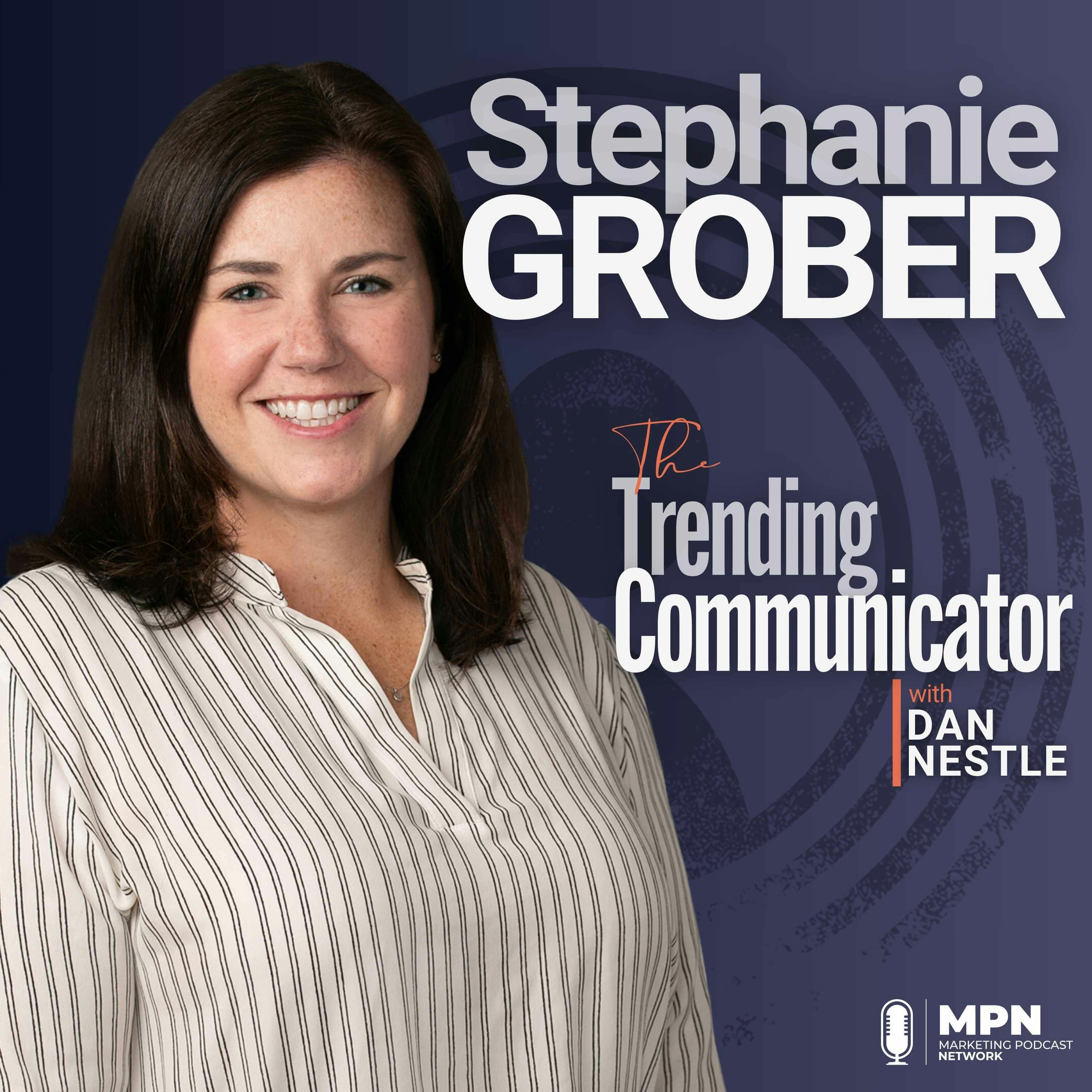
The Art and Science of Earned Attention - with Stephanie Grober


Authority-building has entered a new era—visibility hinges on context and credibility, and your expertise must be discoverable not just to humans but to machines.
In this episode of The Trending Communicator, host Dan Nestle explores these seismic changes with Stephanie Grober, Marketing and PR Director at the Horowitz Agency and a true trailblazer in legal and professional services PR.
Stephanie has mastered the art (and science) of making experts both visible and quotable, securing more than 200 high-impact media placements in a single year while connecting the dots between traditional PR and Generative Engine Optimization (GEO). She was already making her clients discoverable to the machines before most of us had even heard of ChatGPT.
Listen in and hear about:
- How traditional media relations thrives by blending strategic expertise with authentic human connection
- Why building credibility and visibility is essential for experts aiming to shape public narratives
- What role generative engine optimization (GEO) plays in making experts visible to AI-driven search
- How the definition of newsworthiness is shifting amid a relentless, minute-by-minute news cycle
- Why earned media placements influence discoverability but are not a magic bullet for GEO
- How leveraging both personal and firm branding helps legal and professional services stand out
- What opportunities and risks AI introduces for PR professionals, reporters, and the stories they tell
Notable Quotes
On the rapidly changing news cycle:
"Evergreen stories...there’s no room for them right now. Think about how much news, how much breaking news is coming at us. The news cycle doesn’t even feel like 24 hours. It feels like 24 minutes." [00:12:09 - 00:12:27]
On the human element in PR (and reluctance to let AI take over):
"PR is still very human...We aren’t using it to pitch. And I’ll say that there are some agencies that may be writing their pitches with AI. We are not. And that is a choice. We want to stand out as being authentic and human." [00:19:36 - 00:20:58]
On why traditional PR isn't dead—it's evolving:
"It’s a science and an art is what I like to say. Every time we try to make it a science, it shows us that it is an art and vice versa." [00:27:25 - 00:27:45]
On discoverability in the era of AI:
"We’ve been training the LLMs this entire time without realizing it. So for us, you know, some of the ways our clients have been referred to colloquially, you know, now that’s how they’re being discovered in a generative summary." [00:46:47 - 00:47:14]
Resources and Links
Dan Nestle
- Inquisitive Communications | Website
- The Trending Communicator | Website
- Communications Trends from Trending Communicators | Dan Nestle's Substack
- Dan Nestle | LinkedIn
Stephanie Grober:
Timestamps
0:00:00 Authority Building’s Evolution & AI’s Role in Visibility
0:06:12 Legal & Accounting PR in a Fast-Moving World
0:12:09 Shifting News Cycles, Pitching for Relevance
0:17:30 Traditional Media Relations: Still Vital?
0:22:35 AI, Authenticity, and Human-Centric PR
0:27:25 Art vs. Science in Media Outreach
0:33:49 GEO (Generative Engine Optimization) Disrupts PR Strategies
0:39:06 Earned Media’s True Influence in GEO
0:44:34 Discoverability, Signal vs. Virality for B2B & Legal
0:50:56 Pivoting Expertise—Challenges in AI Search
0:57:30 Human Relationships, Strategy, and ROI in Legal PR
1:02:00 Supporting Journalists and the Future of Media
(Notes co-created by Human Dan, Claude, and Castmagic)
Learn more about your ad choices. Visit megaphone.fm/adchoices
00:00
Daniel Nestle
Welcome or welcome back to the trending Communicator. I'm your host, Dan Nestle. Has the entire game of authority building changed and we're just now beginning to notice. For 20 years we played by the same rules. Get the placement, build the backlinks, rise in the rankings. SEO replaced clipbooks, but the logic stayed the same. Be findable where people are looking. But people aren't looking anymore. They're asking, they're getting synthesized answers from AI that's drawing on patterns of authority and credibility. And if you or your firm aren't part of those patterns, you don't exist. You're invisible. Elite firms are starting to grasp that those tier one media placements that used to drive referrals are now training the AI. Except the rules are completely different. Keywords don't matter. Context and credibility do earned attention, ladies and gentlemen, at its core.
01:03
Daniel Nestle
Now, I've been pretty vocal about the cult of top tier media worship and that big budget lines for traditional media relations is for 99% of companies a huge mistake. But despite my occasional hyperbole, that's not to say we should ditch media relationship. Because when it makes strategic sense and you're getting context rich coverage, then there's a clear return on the investment. So by all means, get out there and pitch. Well, today's guest is a case in point. She secured over 200 media placements in a single year on Forbes, New York Times, CNN. But what's interesting is she connected the dots between traditional PR and generative engine optimization geo before most people even knew what the hell they were talking about. Before most people even knew the word geo, before most people even talking about AI search.
01:52
Daniel Nestle
She's lighting up the world of professional services, PR and marketing. She's led teams at top 50 accounting firm and now from the agency side she specializes in marketing and PR for legal services. Named as a Crain's New York Business notable leader and a PR News Top Women awards winner. She's figured out how to make experts visible to machines that synthesize rather than search. So we're going to dig into why tier one media still matters, but for completely different reasons. Making her debut on the trending communicator, marketing and PR director at the Horowitz Agency, Stephanie Grober. Stephanie, very good to see you Dan.
02:31
Stephanie Grober
Thank you so much for having me. You have had some amazing guests on this show. So I am truly honored to be here and really excited to talk with you.
02:41
Daniel Nestle
It's going to be great. It's rare that I have a A vertical specialist in some ways. Right. Like, I have people on who are, you know, corporate folks or. Or consultants or thought leaders, writers, whatever. And even the corporate people have been all over the place, you know. But I feel like I share some really interesting ground with you because, you know, I. I started in marketing communications, working for a recruitment company, but focused on accounting and finance. And then, you know, as a marketer. Not as a. Not as a recruiter, as a marketer. And then. Then I was working for a huge accounting membership body, the aicpa, for a while. So, you know, in that world of, you know, professional services, marketing and communications, it is. There's a lot of things that are exactly the same, like storytelling.
03:34
Daniel Nestle
Storytelling tactics are tactics, but there are some idiosyncrasies and kind of special things about services that I think a lot of folks out there either choose to ignore or don't know about or really don't understand. And that is, I think, one of the things that we both bring to the table. And it's funny, I see people's eyes switch off when I say I did PR for accounting, and they're like, what? What? Look, they're exciting people. They're cool people, you know?
04:08
Stephanie Grober
Yeah, that lights me up. I love that commonality between us. And having been a marketer for my entire career across various different industries, when I found professional services, that's the moment when I felt, wow, this is my home. I loved working with accountants, and I saw the. The impact that their services had for individuals and businesses. And, you know, when we're talking about privately held businesses, right, there's a. There's an owner there. And. And it makes a difference. I was at my accounting firm during COVID That was a really difficult time. And the guidance that were providing, which was almost daily for. For several weeks, if not months, that was critical. And then, you know, accounting and legal are similar fields.
05:00
Stephanie Grober
And I was thrilled when I joined Horowitz Agency, when I found Horowitz Agency, really, and discovered that there was an agency focusing in legal public relations. And it is an amazing place to be. I feel very fortunate to have this niche. You know, PR is vast. There's a lot of people pitching, and there's a lot of people pitching a lot of things. But we have legal experts, technical experts, business experts, accountant, you know, accountants, CPAs. And so we are so proud to be pitching them and to be helping them share their knowledge, especially at a time like this, globally, you know, politically, everything that's happening, the change, breaking news overnight. So it's an important time for our clients. And it's a really special time to be doing this type of piece of are.
05:56
Daniel Nestle
Oh, for sure. I've never been fortunate enough to have a client or a company, let's say, that was already well in demand by not just the media, but the kind of times that we live in. I mean, accountants are one thing. Everybody needs your accountant, but it's not necessarily newsworthy or story worthy, you know, until there are regulations you got to deal with or there's changes to the law or it's tax time or whatever it is, you know. But when your clients are all lawyers, litigators, you know, specialists in different areas of the law, like, we are a very litigious society. We.
06:39
Daniel Nestle
Anybody who, you know, for those of us, for those of our listeners who are outside of the United States, I am sure that you are somewhat aware that there are always court cases happening that make the news and you know that there are changes to any. Well, they happen every day, sometimes twice a day. But there's changes to kind of the, the regulations and the laws that kind of govern the land that you need good experts to respond to. So you imagine that's part of why you know, why you're, you've been kind of so voluminous in your placements.
07:19
Stephanie Grober
Yeah, it is certainly now we cover more than 30 practice areas and industry verticals. So just like any PRofessional, there are times where there's not a lot of activity in relation to what you're pitching. When the lightning in the bottle strikes and suddenly there is breaking news, we go after it. And we've seen that, you know, we work with folks international trade, an area that, you know, I really wasn't following as closely as I am now. And it's one of the hottest topics of the year. There are trends in the capital markets space that make right now a great time. And if there aren't obvious trends, then, you know, we find them, whether it's, you know, at the ground level, the regional level, the trade press level. And so we're always making that coverage happen.
08:17
Stephanie Grober
But certainly overall, I would say the last two years have been incredibly exciting in legal pr. Our team in particular, you know, this is a traditional, very traditional industry, as you know, being in having been in accounting. And so, you know, there's some law firms and lawyers who maybe are accustomed to being quoted in legal trade, you know, maybe an occasional New York Times piece here. And there we go after national breaking news across all tier One legacy media, but across every outlet and broadcast television. And so there are times where the folks we are working with are amazed because they've never had these bountiful opportunities and some things that you know, they may not want to weigh in on. But we're going, you know, beyond Court TV type opportunities into Reuters, Associated Press, fox, USA Today, cnn, cnbc, abc, you know, local stations.
09:17
Stephanie Grober
And so it's our clients take that journey with us and it's very exciting for them as well.
09:22
Daniel Nestle
It must be, it's again, it's almost otherworldly to hear a, a PRofessional talking about how they're just going after the story. I mean people go after the stories, don't get me wrong. But jumping on these national conversations with an actual kind of story to tell. This is the issue that I have with a lot of corporations and even some agencies where it's this whole over promising thing and under delivering but scaled out to millions and millions of dollars sometimes a year where you have a CEO or a leader who is convinced that their widgets are so revolutionary or their services are so kind of differentiated or whatever it is that they deserve that time with the premier reporters of the world or where they, you know, hey, I don't, you know, just call cnn, get me on, you know, whatever it is.
10:32
Daniel Nestle
And we are too, I think we've been too timid for years and years or at least to kind of, you know, I guess. Well, on the one hand maybe we see it, maybe some people just see that as a challenge. I'm going to get this guy into the Wall Street Journal. But I think for the most part it's like, well, you don't want to jeopardize our, our advisory role here. You know, long term by telling truth for change. And the truth being you don't have a shot in hell of getting one of these things. Like you just, you're, this is not newsworthy. It isn't. And they don't know who you are. There's two, there's two prongs to this. It's new, there's newsworthiness, which of course is critically important.
11:14
Daniel Nestle
But then there's also visibility, credibility, reputation of the person that you're putting forward in the company they represent. And, and that the second part is, might be a little bit easier to build over time if you have a cooperative executive and executive team and branding and marketing are working together nice and closely. But you know, in general it takes time. It takes a Long time. And agencies and individual consultants are paid for results now. So there's that. That sort of dichotomic dichotomy that's happening all the time.
11:57
Stephanie Grober
Yes, I would say, you know, one of the evolutions we're seeing, and this is something we are all, you know, all of us in pr, educating clients on right now about, you know, how and where we can be successful. Evergreen stories. You know, those stories that come up every year, there's no room for them right now. Think about how much news, how much breaking news is coming at us. The news cycle doesn't even feel like 24 hours. It feels like 24 minutes. So there is limited interest in your just sort of evergreen, typical piece that might have run every year 10 years ago, and reporters would have a slot for it. There isn't anymore. And so that's a change that we have to embrace. Stories that we want to place, we will still work to place, but they have to land.
12:50
Stephanie Grober
And if they're not cutting through the competitive environment, we might not be able to place them, but we might be able to find you a chance to weigh in on a breaking news story. So that's just one way that we're very strategic about our ability to secure coverage. I read something recently from another PRo that said only 1% of cold emails get a response, and ours is much higher. And so I'm very proud of that on our team. It speaks to the work that we do, obsessing over the news and where our clients fit into that news cycle.
13:29
Daniel Nestle
Oh, for sure. I think I say oh, for sure too much now that I've said that, but it's really. I'm agreeing. I think that there's really, you know, the expertise that you represent is extremely highly valued. And so, I mean, I kind of want to talk about that a little bit about where, you know, this expertise and visibility that your clients are. Are getting essentially from being out there and being. Being seen and heard by the journalists. But the journalists have to kind of know who they are first. And, you know, there has to be a lot of trust relationships in place for that to happen. And. And valid, legitimate, credible stories. You know, how are you seeing this whole kind of emphasis on. On expertise changing and. Or is it changing? And do you think it's varying field to field? And.
14:30
Daniel Nestle
And, you know, do you think it's in. How do you think that the people who are experts out there need to be thinking about becoming more visible?
14:41
Stephanie Grober
I'm sure it is changing. I think it's a Credibility, first play. So when we're pitching, you know, we have the benefit of clients with advanced degrees, educations, a lot of different letters after their name. Right. So that works to our benefit. And. But some clients have never done PR before. And so you never want to put somebody brand new to this in front of the Wall Street Journal if they're not going to be comfortable or the reporter is not going to be comfortable. There's a lot of training that can be taking place and that I think is key right now is we're looking at the impact of GEO generative engine optimization and we're considering what earned media, what effect earned media has on that. So then we're thinking, well, earned media comes from our pr. So are our clients ready for our PR strategies?
15:45
Stephanie Grober
And that's where the training is important, media training. Understanding how opportunities come in, making sure folks are responsive, making sure they understand what is expected or desired of them from a reporter. But of course, you know, we never want a client to say anything that is, you know, antithetical to what they truly think or how they would approach a question. But all of that should be taking place now to capitalize on the PR opportunities that can then benefit your GEO strategy.
16:22
Daniel Nestle
So visibility, building your visibility and building that credibility enhances your chances to gain coverage and to be received and seen by journalists and reporters and writers and authors. I mean, that's kind of. We've known that, right? We've known that forever.
16:41
Stephanie Grober
Absolutely.
16:42
Daniel Nestle
And it just seems to be accelerated now. You start talking about geo and we will get to that, believe me, because if there's one thing that we've been talking about a lot lately, it's geo. And, and I definitely want to hear what you're seeing or I want to talk about what you're seeing. It's interesting because a lot of. So a lot of what you're saying is we haven't talked about the. How this is happening necessarily, and we haven't talked about the ways in which you are discovering what to cover and how you are preparing and all that kind of stuff. But on the surface, the steps, the process is very much traditional media relations, right? Very much traditional pr.
17:30
Stephanie Grober
I think I'm here to champion traditional media relations.
17:33
Daniel Nestle
And that is, that's terrific. I mean, you know, like I said, if it makes serious strategic sense to do it, then by all means. And you know, maybe some folks are going, okay, Dan, you're eating crow now because I've gone out there and said, like, you know, media relations is dying and we need to let it go. But, but, you know, like, you have to have a point of view. My point of view is that for the vast majority of people, it's just, it's not a. It's not worth the. It's not worth the approach.
18:00
Daniel Nestle
But in your case and in the case of these, of, you know, serious expertise, having a bench of serious experts that are completely relevant to what's happening today and that have a way to contribute to the story, not just a story to tell, but actually influence the direction of a story or influence the readers. I think this is a different set of rules. And no, I'm not hedging. Okay, Anybody out there, I'm not hedging. Most of us are not working in legal PR and think that there's some. There, there are some parallels to everything for all PR people and all comms people. But what I wanted to ask you though, is, you know, you're outlining a very traditional, you know, media relations approach.
18:57
Daniel Nestle
But I feel like under the hood there's probably some differences between, from what you're doing now versus what traditional, you know, media relations, you know, might have been or how people might imagine traditional media relations are. You've already talked a little bit about geo and we'll get there. So I'm kind of wondering what is the connections. What, what are the connections between technology, between AI and, you know, the tools available to you that are either enabling, accelerating, or making your media relations process a lot more efficient?
19:36
Stephanie Grober
Well, I would say first and foremost that PR is still very human. That is where I stand on it today, which again, might have us on opposite ends of the ring, so to speak, but certainly we're using AI. And look, legal, traditional fields, professional services, there's other highly regulated traditional spaces as well, and they are embracing AI. Marketing teams in particular are embracing AI. Right. For communications purposes. Applications of AI directly within the practice of law are highly contested right now. There are cases where lawyers have been fined for using AI, et cetera. But, you know, from a marketing perspective, there's less risk there. So I'm sure most of us as marketers are using AI to save time, certainly to be clever, to help us write, to help us repurpose. We aren't using it to pitch.
20:46
Stephanie Grober
And I'll say that there are some agencies that may be writing their pitches with AI. We are not. And that is a choice. We want to stand out as being authentic and human. We worked with reporters who, some reporters who don't even want to accept written comments at this point because of the possibility that it could be generated by AI and that's extending even when we're talking somebody who's a legal professional, you know, so we AI doesn't write our pitch. AI might inspire us or help us rework something, but it doesn't write our pitch, nor does it write articles for our clients. Everything is authentic. And I think that's something we use to study, stand out at this point in our relationships with journalists. And then there are a lot of other tools, too. You know, measurement tools are key right now.
21:39
Stephanie Grober
That's something, you know, marketers always have to utilize. You know, why do we have our jobs, right? What impact do we have on the bottom line, even though we're a full service marketing agency? So even though PR is one of our biggest service lines overall, we want to see demonstrable impact on the revenues of our clients year after year. And how do we trace that back? So any measurement tools we can use to that effect are always good. Seeing the reach of articles is always exciting, too. And there's a lot more tools for just reach measurement now, audience reach, seeing things on social, tracking trends. So there's folks who, you know, while we're using some of these tools, I'm sure there's others who are way more advanced than I am.
22:29
Stephanie Grober
We're using it to supplement the work that we're doing, you included, I'm sure, are light years ahead of me.
22:36
Daniel Nestle
I wouldn't say that. I mean. Well, first of all, I, I want to clarify, I'm definitely not on the opposite end of the scale with. When it comes to the role of the human in the relationships that you're building with the media. In fact, you know, I am either. Depends on your perspective. I'm either the bountiest recipient or the sad victim of pitches all the time. Like, I get pitches every, like I get multiple pitches every day for the podcast. Right? I mean, I am not. And I, and anybody out there who is using an automated pitching platform, I'm not saying don't do it, but I am saying very low chance, very low chance of, of getting through to me. And it's not because it's AI, it's because I know that you haven't thought about why this guest is important to me.
23:31
Daniel Nestle
So if you are, if you're, if the results of what you're doing are hinging on a very human reaction and a human decision, you have to be human about the whole thing, really. I mean, even if you have AI help you draft pitches, and stuff. I don't think that's anything to worry about, but it's more about what goes out the door. You can have AI draft things all day long, but who cares what drafts? What matters is what you publish, and what matters is what you send out. And can you stand up and be accountable for that? And if the AI is doing it well enough for your standards, what different then go ahead. If it's not, don't. I'm a little tired of having the argument, and not with you, just in general about AI. This content was written by AI.
24:30
Daniel Nestle
So it's less than. Almost always it's less than. I mean, there's no doubt it is. But if. If you have some people out there and, you know, kind of looking in the mirror when I say this, who are very confident in the fact that they're delivering thoughtful, insightful, valuable work and AI is helping them to get it out the door better and faster, then, you know, there's no. I don't think there's an issue. Transparency is important, but I don't think there's an issue with that. But anyway, like, what I was trying to get at, though, with was the. With the traditional media relations and the use of technology.
25:17
Daniel Nestle
And it's not necessarily the AI, you know, using AI to pitch, because I would imagine, and, well, I know for a fact from being pitched that it's extremely ineffective on scale and it pisses people off, especially journalists who have no tolerance for that kind of thing. So I'd imagine, need to have a very strong human approach. It's the ecosystem around that. So when you think about your industry and you think about your verticals, you know, you now have been in it enough to probably know who the people are that you need to speak to and to really kind of make those connections, and maybe often you're connected by other people and that's sort of the way things work in parallel. Are you using any.
26:03
Daniel Nestle
Is there anything that you do to identify opportunities or to identify journalists or stories or pull in, identify trends, watch trends happen, monitor. And I know that there is, but that's where technology comes into play more and where more opportunities exist for layering AI on top of that, especially to help that analysis and to help that kind of strategy and even your media relations strategy perhaps kind of augment or enhance, you know, so it's. It's more about like the traditional. When you say traditional media relations, it's rotary phone, cigarette out the, you know, out one corner of the mouth and martini in hand. There's that tradition, you know, but then there's also, you know, this.
26:57
Daniel Nestle
This idea that it's all like phone work and, you know, picking up the clippings versus having dashboards and real analysis happening, like looking at your muck racks of the world and saying, you know, we need to. We've identified these 15 journalists and these are the stories they've written. And that's why they're good. That's why they're strategically important for us to reach. So there's a difference.
27:25
Stephanie Grober
It's a science and an art is what I like to say. It's what I say to our folks who come in to start their PR careers with us. Every time we try to make it a science, it shows us that it is an art and vice versa. There is something to be said for AI to help decision making, but then there are times where you take a chance and it pays off in spades. And so I never want to inhibit our team from taking those chances because the magic can happen there. There might be a reporter and you think, you know, there is no chance they're going to cover this. I just don't think it's right for them. I'm going to hold the pitch and it gets sent and it turns into a massive story or a massive hit.
28:16
Stephanie Grober
And so, you know, I don't restrict our team. I love that about our team. And as long as, again, the relationship is there between the two individuals on either side, it can work. And nobody's going to come away, you know, annoyed. You know, we're. If we're asking a reporter, hey, would, you know, would you take this? And it's not a risk for them. But, hey, what do you think? That's way less offensive than maybe what you're saying, a sort of generated pitch that is. That doesn't acknowledge that it might be outside of their wheelhouse, their typical. Their typical beat. Yeah, so, yeah, so it's hard to, you know, it's hard to narrow down. I don't think that today we can be replaced. I hope not.
29:07
Daniel Nestle
No, certainly not.
29:08
Stephanie Grober
But, you know, we're experimenting, all of us with AI and I think, you know, there's newsrooms who are. There's several newsrooms who are coming out and saying that AI is going to be writing for us. There's some who are coming out and saying that they're not. So we're going to see both sides of this issue.
29:27
Daniel Nestle
Yeah, the newsrooms. Newsrooms is a whole different thing. That's like, which news organizations are using AI, which aren't. I mean, it's. It's a. That's a conversation that's ongoing. And my friend Pete Paschel, who you might know, he's been on the show, is really focused on looking on.
29:43
Stephanie Grober
Yes.
29:44
Daniel Nestle
Looking at the media. Right. And it's fascinating to see how different newsrooms, for example, are. You know, they're using AI for unimportant things, like unimportant stories. Filler, you know, what used to be filler and print, but now digital. Doesn't make sense to talk about filler. But, you know, you need. You get this, all this other stuff. And now I have a bigger suspicion or more cynical view about it, which is that they're not. It's not because they want to provide filler. It's because they want the geo. Right. They want. They want. Yep.
30:17
Stephanie Grober
Yeah.
30:17
Daniel Nestle
They want to be. To feed the beast. And they want to be. They want to come up and search. And that being the case, you know, we can talk about if there's no byline associated. And it's pretty clear that the newsroom, in the newsroom is transparent about where they're getting this information from. Again, on the surface, no problem with it. People have to eat. After all, companies have to make money. I feel bad for the folks who are paying to advertise across those platforms and don't know what they're advertising on. So there has to be a little more. A lot more transparency in that. But anyway, I think that AI, you know, AI is not a magic wand and it's not a legion of unicorns bestridden by leprechauns throwing gold everywhere. It's. That's not what it is. I mean, it's simply.
31:21
Daniel Nestle
It's simply a very. It's not simply anything, but it is. It is a revolutionary technology for sure, with a lot of holes in it. And when there's regulatory environments, those holes are pretty big. And like, use it at your own risk. But I think that media relations in general and, you know, publicity, PR and the way that you're tying it together with marketing, because I think that's a connection that has to happen. It wouldn't be anything like it is today if it wasn't for the connection of technology, the way that all these different things are interconnected and we can see results, we can see impact numerically through data, but it's meaningless without the human interpretation and insight and the relationships that power all this stuff. So I don't see any. Any real risk of people who have both of those things Being replaced.
32:27
Daniel Nestle
You know, to sort of address your earlier point, I don't think PR is, PR people are in any danger of being replaced anytime soon because especially now because of the new focus on geo. But I, I, you know, I think domain expertise is always going to count for a lot and increasingly so because we have to some because in the end somebody's got to be accountable for something.
32:49
Daniel Nestle
You can't, you're not going to hold ChatGPT accountable for anything, but they'll hold Stephanie accountable for things, you know, and so that kind of makes me really want to go turn around a little bit and talk about the, this whole GEO connection because even though the art and science, let's say, of media relations is a very human endeavor, you're trying to please the machines like there is a huge element of now AI being a stakeholder audience. So what are you seeing happening in geo? Because I know that this is something you've been talking about a lot lately and this is something you're discussing with your clients. What is the kind of the latest and greatest and the connection between the media relations and GEO as you're seeing it.
33:49
Stephanie Grober
So things are shifting. I think GEO took the PR world by storm. I know you read and dissected that Muckrack report that came out, as did all of us, and you know that painted things in a very positive light for PR people. The intersection of GEO and pr, which was great if we back up, you.
34:12
Daniel Nestle
Know, as marketers, a little too positive, if you don't mind me saying.
34:16
Stephanie Grober
Right. You know, depending on how you ready.
34:18
Daniel Nestle
I laid into it a little bit.
34:19
Stephanie Grober
Yeah, yeah, yes, exactly. You know, so as marketers and some PR people may not have a more diverse marketing background, I'm fortunate that I've held a lot of different marketing roles in my life. So I've worked in SEO. Discoverability is the name of the game. Right. Forever we've been needing to be discovered. So whether it was through SEO, which by now all clients were familiar with SEO. Right. Just talking about a new era of discoverability. But most likely the foundational principles that you've been working with and employing for clients are going to serve you well in this new age with a little bit of shift and a little bit of trust from clients. So it's interesting, you know, we have some clients recently we had a PR opportunity for a client with a website that wasn't what you would consider tier one media.
35:20
Stephanie Grober
But as far as GEO authority has huge authority because of the way this site has been structured. And so when our client asked, hey, you know, can you tell me more about this site? I said, you know, it is a very popular site. It's not the New York Times, it's a very popular site. It also happens to have a ton of authority for generative summaries, so. And our client was pleased to hear that. So, you know, the way we're trying to navigate this is by satisfying sort of all media relations needs right now, getting both the high level placements as well as some more maybe experimental placements and seeing what is affecting search summaries. Yeah, we play around with these summaries all the time. Personally, I find that they're inaccurate frequently. I see that, you know, investigating, digging deeper into competitors in the space.
36:20
Stephanie Grober
I know things are inaccurate. So I hope that folks aren't letting AI make their decisions for them yet today. That's, that's my hope. You know, there's a lot of potential for this technology and I think we're in the very early stages. It's evolving the algorithms that determine what authority each type of content has. Changes from LLM to LLM changes each day. We've, we talked a little bit about user generated content sites like Reddit, their authority. I just this afternoon I read something that ChatGPT is no longer going to give a site like Reddit high authority.
37:01
Daniel Nestle
So that's major. That's major, right?
37:04
Stephanie Grober
I mean, you know, it's going to be day to day.
37:08
Daniel Nestle
It's, it's a, that's the kind of thing that throws your comms people, your PR people, brand marketers, etc. Into a little bit of a, of a spin because not spin the sense of spinning language spin as a sense of losing control of your life because there's, there's always like this evidence that, okay, this is the media platform that you need to be in order to be visible in, you know, on AI or whatever.
37:42
Daniel Nestle
And well, let's restrict this to AI and more recently it's been the things that we've heard and let's call them myths at the moment even or unproven things that number one you're hearing and we've heard and Muckrack kind of put this through pretty hard, is that earned media is the most powerful force in the known universe for GEO for being ranked or for being ranked for appearing in AI related search number two, that User generated content like community content is extremely important to AI. And the third thing is that sites with longevity that are already really, that essentially have high authority scores from the old Google rubric, you know, places that are already authoritative also way heavier, especially conversational content within those domains. I think that third one is true.
39:03
Stephanie Grober
I agree.
39:03
Daniel Nestle
I'm not sure about those first two.
39:06
Stephanie Grober
Right. And I think some folks were scrambling to build their own, you know, user generated content, platforms, portals, you know, their own message boards to capitalize and try to game the system. I, again, I, I, I consider myself a traditionalist in that I believe in the foundational principles of marketing and I'm never one to preach a buzzword or to put all my eggs in one basket for the next big thing. And so I take a, a balanced approach and I love to see when that pays off steadily over time. I'm sure there are folks who are amazing at overnight success and that's their lane and I'm in mine. But yeah, I think with AI and its impact on discoverability, we're going to see a lot of things shift. And earned media is not the end all, be all to appearing in search.
40:03
Stephanie Grober
It does play a part in it. Some sites you think would have high authority may not have as high authority as others you would never even think of. The fun thing for a PR person is we're not restricted. We can get in virtually all of those outlets so the playing field opens up for us. It's a time to gain the trust with your clients to try some new things, new outlets, some new avenues, some new platforms, types of media. And that, you know, personally, professionally, creatively is very satisfying right now. And you know, you have to navigate those considerations with clients hopefully who are, you know, not coming and saying, well shoot, why aren't we on Reddit right now? Because we in search.
40:56
Stephanie Grober
But again, the space that I'm in professionally is not direct to consumer and so we're not looking for click to buy. The customer journey is much different business to business a lot of the time, although not always. So there is a little more flexibility. I'm sure the pressure is on when it's a question of why can't we get them to click and buy our product immediately from, from one search. And so, you know, we have to sort of remember where everybody's coming from.
41:32
Daniel Nestle
Yeah, it's a, it's also whether you call it a search or not. There's, there's, I think we're, we start from the wrong frame. If we look at it that way. You know, consumer brands, they want to appear in the, you know, on, they have the, that Google mentality. I need to be in the top 10, I need to be in the top this. And you know, even now on Google, if you're in the top 10, you're still like way fold because of all the AI stuff that's going on there. And I've never been a consumer marketer. Like I was always B2B and services especially. And you know, one of the things I was going to ask you earlier was why do you gravitate towards services?
42:12
Daniel Nestle
And I think you've just sort of hinted at in a big way that it is, it's the B2B side of this and the fact that the audiences behave very differently and you're not beholden to these sudden spiky trends. Look, on the other hand, you don't get the glory of something going like, oh, this one got 3,34 million views. Almost never gonna happen, right? Almost never gonna happen. But you do need to reach just the one or two people. So who cares if it got 15 views if they were, if three of them were the right ones.
42:53
Stephanie Grober
Yeah. And it's a multi layered experience over time versus right now. And then let's, you know, retarget to them so they can't escape our product for the next 16 websites that they go on. Yeah, so it's a very nuanced, layered approach that we want to have multi platform, multi channel, different types of content. There's referrals still playing a big part, person to person referrals. You know, when we're looking at social media, we're looking at LinkedIn, you know, which is way different than other platforms. You know, lawyers on TikTok. We get a lot of questions about lawyers on TikTok. Can every lawyer be on TikTok right now? No. Are some lawyers on TikTok? Yes. So, you know, there's a huge range of applicability to some of these channels and outlets. But I personally love that about B2B.
43:52
Stephanie Grober
And again, like you said, maybe at the sacrifice of not being able tout moments of huge virality or incredible overnight sensation. If you appear on a talk show, Good Morning America with your product, maybe your sales spike overnight, something like that. You know, we have had some amazing articles reach into the millions of views overnight with clients and that's exciting. So for us, you know, I think those are those moments broadcast news certainly when yeah, clients of clients Say, I saw you on TV last night. That's always exciting. But yeah, we're not, you know, we're not selling a product. So yeah, there isn't that measurement.
44:34
Daniel Nestle
It's also, it's also important to keep in mind that especially now with GEO playing a larger role or which, even though we still don't know exactly what it does, we already know. We already kind of, you and I have established firmly, and there's no, should be no doubt, no argument from anybody else outside of this podcast that the focus on earned media is a little overblown for, for, for geo. I mean, critically important, don't get me wrong, a little overblown. And you know, appearances in top tier media are not going to suddenly get you ranked. But put that aside, it is absolutely the most important growing discoverability platform. And that discoverability is not about direct query, although sometimes it is.
45:25
Daniel Nestle
And when somebody's searching for you directly, AI shouldn't be thinking, if somebody says, tell me about the Horowitz Agency and AI, it's not going to be, oh, here's the Horowitz Agency. Oh, by the way, look at these other agencies too. Generally not going to do that unless you ask it to. Whereas Google will put your competitors ads right in front of, right on top of you. You can buy competitor brand words, competitor keywords and so on. The issue though, with like, you know, with you with, or the issue that the benefit of media is the accrual of authority. It's not the, it's not the single shot, it's the consistent, you know, drum beats. The, the, and the more context rich, the better. So where you're getting that story, you're quoted, great, there's a paragraph about you. Better. The story's about you. Holy moly. Right?
46:27
Daniel Nestle
When the story's about you. Now AI's got something to think about, you know, because it's not about the keyword, it's about relevance, context. And you know, something Andy Crestadino taught me recently is semantic distance, you know, semantic relationships between search and what you're finding.
46:47
Stephanie Grober
How were you referred to in the article? You know, these are, we've been training the LLMs this entire time without realizing it. So for us, you know, some of the ways our clients have been referred to colloquially, you know, now that's how they're being discovered in a generative summary. And were fortunate that, you know, we've been doing that on purpose. It's sort of like SEO optimization, but externally, you know, and if that's the way a headline ran, even better, you know, if it ran in a major outlet, fantastic. And so those are where we're seeing the biggest wins today for pieces that might have come out a year ago, a year and a half ago that had a dramatic impact on search.
47:40
Daniel Nestle
Yeah. And people forget that, like, recency is very important, but it's not, but it's not really relevant to your first, to your AI search at first, because AI has a hierarchy of providing answer for you or for. Or finding the pattern match that hits that that responds to your prompt, and that hierarchy always begins with the information that's already in the LLM, which means it's not the information that's out there right now, because then it goes to the web if it can't answer properly. But if you are quoted in the last couple years, or if you have, if there are indicators recently, in the last couple years about a person or a brand, then you know, that counts a lot more than people think. So don't discount what you've already done.
48:36
Stephanie Grober
Exactly. Yeah. And conversely, if you want to pivot, that may be harder in the future, too. And take some strategic work because you know everything to a certain point. If it's been talking about you as, you know, a top M and A attorney, and you're pivoting your practice and you don't want to lead with that anymore, then you're going to need to make sure that you work on that with somebody. So that new content is coming out that refers to you in the way that you want to be referred to.
49:06
Daniel Nestle
Now, it's not only new content. You think about the SEOs out there who have been so focused on keywords for many years, and it's well beyond that now. But when you're constructing, when you're writing blog posts or when you're constructing owned content, you're looking at, you know, you're looking at the way that your customers or the way that your target audiences are looking for information and you're writing to kind of satisfy what they're looking for. With AI, though. Well, I mean, that's also true, but AI is going to look at the entirety of your blog history.
49:51
Daniel Nestle
It's going to look at the entirety of your body of work or how do you work, or at least whatever's on that particular media or that website, and it will determine whether you are a semantically strong relationship, whether you have a semantically strong relationship to the search. So just like you said, if you've been an M and a specialist for 20 years and now you suddenly go out there and say, I'm an AI guy. Right. It is the propensity of evidence says that you are an M and A specialist and people who have more AI guy stuff about them will do better in the searches. It's as simple as that. So you have to go back into your content and ethically speaking, you should not change it.
50:44
Daniel Nestle
But there's a lot of unethical people out there who are going to go back in there and know, muck around, you know, start creating new categories though, start creating new categories within your websites, within your own content and build those out.
50:57
Stephanie Grober
Right.
50:57
Daniel Nestle
You know, put, put out your FAQs that mention how you made this pivot. You know, it's just, it's incredibly important that the things that you need to do to at least give yourself the proper legitimacy and credibility that AI is looking for, you know.
51:16
Stephanie Grober
Yeah. So a change like that would certainly take work and I'm sure folks have experienced it before. If your business moves locations, if your business moves states, those are challenges, you know, for your Internet presence. I think we'll see it on a larger scale.
51:36
Daniel Nestle
Yeah. And like something we said earlier, there was another question I want to ask you about, you know, about related to Geo. You're talking about lawyers being on Tick Tock and you look, I know I've seen lawyers on Tick Tock. I've seen, well, for the every once in a while that I check TikTok, certainly see them on Instagram and you know, there are celebrity lawyers, we know this.
51:58
Stephanie Grober
Yep.
52:01
Daniel Nestle
But there's a difference between being discovered as a person and being discovered for your firm. You know, and sometimes usually being discovered as a person uplifts the reputation or uplifts the discoverability of the firm. But the opposite isn't always true because you have to stand out in some way. But when you are working with your clients and they're going out there making appearances, or you're submitting bylines on their behalf or they're submitting bylines or you know, they're on panels or doing podcasts or whatever, how are like, is this something that factors in to their decision or to your decision making about this or to your recommendations about it? Like, is personal brand, in other words, a thing for your clients?
52:52
Stephanie Grober
Always. So we always want to secure a mention for the individual and for the firm. We work for both. They go hand in hand. Now folks who practice solo practitioners of course, you know, solo business owners and again, being so steeped in legal and professional services, that's where I can weigh in from. They have a lot more flexibility because they know what's safe, you know, based on their book of business, their personal book of business. If you're a partner at a firm with 500 other partners, there's a lot more risk and there's a lot more that you have to keep in mind and potentially, you know, 100-year-old firm identity. So we always want to make sure that the two are balanced. We always want to draw attention to both.
53:41
Stephanie Grober
Each can have their individual identity, but our goal just, you know, being engaged as an agency is to support both. Some, some, you know, may go out and try to establish more of their own identity, and that's supported as well because they do have to grow their book of business as professional service providers do. But the hope is that your professional identity and the firm that you're with, the professional identity of the firm can be complementary. And when they're not, that's when we see sometimes stories, as we have in the news recently, of folks departing, you know, their firm for another that does more closely align with their personal values or identity, for sure.
54:27
Daniel Nestle
I mean, the rules apply across any employer, employee relationship or any partnership relationship. You know, where you are representing, you're either representing a brand or you are the brand. And those are different scenarios. You know, there are disclaimers. You can say all this kind of stuff, I'm sure, don't always work because public perception is what it is. So, you know, you have to, especially in certain industries, regulated industries, or hot, like hot topics or very, you know, hot potato items, whatever you want to call the controversial places of the world. You know, it's very difficult, I think, to navigate those waters.
55:11
Daniel Nestle
That said, you know, if you are a senior person with domain expertise, just building your book, let's say, of appearances and of content out there, you know, if it's important to you to not disappear, then in addition to the media relations, you should probably be building out your own platforms. You know, you should probably be on podcasts yourself, and you should probably, as yourself and you should probably be, you know, start a blog. Like everything old is new again. Start a blog again. We were supposed to start blogs in 2002 and then again in 2009. Let's start them again. Let's start blogs. You know, there's so much that you can be doing to defend against that Invisibility, I think lawyers are like in a great spot for this. I mean, there's so much expertise that they can do.
56:14
Daniel Nestle
I think differentiation might be a little hard sometimes, but people want to hear what they have to say as much as they make fun of them.
56:23
Stephanie Grober
I know, you know, who's, who've proven out that theory. Yes, you know, there has been some hate for the profession, but, you know, today I don't know that we hear that as much because they, we need them.
56:41
Daniel Nestle
It's always a cynical tongue in cheek thing. It's not really like, I don't think people, I don't think it's like a real.
56:45
Stephanie Grober
Exactly. Yeah, exactly. So, yeah, our clients have certainly proven that out. And it takes people, it takes teams who work really closely together, whether it's consultants and in house teams, whether it's one person in house or 40 people in house. It takes constant communication, again, trust and relationships to make it all work and work seamlessly. And so while it looks like it might be easy, I can assure you that there is just nonstop activity in the background to make sure it looks that easy. Even for folks who are in the media day in and day out, there's a lot of people supporting them. And, you know, it takes a lot.
57:30
Daniel Nestle
Well, I know that all the, all my friends out there who lead companies, who've been through all the roles, who've been in agencies and who are legendary pitch, like media relations people because, you know, I know a few of those folks and you know, they've challenged me on some of my contentions about media relations. And I definitely have a much broader view of it than I necessarily reveal in a substack piece. Right. But I think it's really important to hear this entire, your entire story here about really what goes into it. And it's not just throwing out random cold calls and hoping for gold. The difference between what you're doing and what I've been decrying, I suppose, as malpractice, is that there is a strategically important reason for you to be pushing in this direction. There's also a receptive market.
58:44
Daniel Nestle
You know, there's a market reality there that, you know, for every dollar invested in media relations in the legal profession, let's say the return is better than for every dollar invested in, let's say, a manufacturer of wingnuts. Like, it's a very different return on the PR investment. And I think that's what people really need to do is look at that very carefully. How they're using their peso to talk about Jimmy Dietrich for a second to how they're modulating their strategy based on paid, earned, shared, owned and where they need to turn up the dials and turn it down. Sometimes it makes sense to turn the earned and especially media relations up to 11. That's what I'm hearing from you. And I think that the week would.
59:38
Daniel Nestle
We could use a lot more, I think more understanding of where it's important, how it's important and what the great results can be. When it is a human to human business, when the art and science are mixed and when you legitimately have important things to share. I think those are important points. Points to keep in mind when we think about media relations moving forward or that's maybe it's just me, I don't.
01:00:10
Stephanie Grober
I think it's a great place to be and it still is. And I think there's still a place for many people in many different approaches. And you know, we're fortunate we still have journalists to work with. So yeah, you know, that's what we have to be thankful for each day that you know, we still have the media and can be a part of this.
01:00:34
Daniel Nestle
Well, as long as you have good stories to tell and as long as people, I think, really value insight and angles and POVs, then journalists will have jobs. You know, then there are the art of not only telling the story, but being a good writer and being a good reporter are, you know, there's weed out there and there's chaff out there and we need to kind of, we need to sort that out a little more. But as long as there's. There are competent, excellent people in any profession, there will continue. I mean that profession should continue in my opinion. Stephanie, it has been an hour. I can't believe it. There's a lot more actually. There's more I wanted to talk to you about. But you know what went, I think we covered a lot about geo, especially where you're taking it.
01:01:29
Daniel Nestle
We talked a lot about just media relations and kind of giving me some interesting perspectives to think about. Of course. But I want to be clear. I'm not on the, I'm not on the no media relations side. I just, I'm on the do it when it's right to do. And you're, I think for you it's right to do. And before we go, do you have any like last words of wisdom for our listeners?
01:01:55
Stephanie Grober
Yeah, you know, embrace public relations right now. Support your media contacts, your journalists that you work with. Be grateful that we still have them. The media landscape is very difficult as they experience mass newsroom layoffs. Start their own projects. Support those, support them in any way that you can because we need the media to do our job as marketers, as communicators, as public relations professionals, and hopefully have a little bit of fun along the way as we're all taking this wild ride.
01:02:33
Daniel Nestle
I, what a cool summary and what we, I think we need to frame that. I, I will find great pull quotes from this, from this conversation. And I always try to avoid the last thing you say, but that was really good. I, I'll, I will give that, give that some thought for sure. But I think you're right. We're needed. Journalists are needed. We need to really remember that. And you know, what was that old, There was an old campaign hug, a hug a policeman or something. I forget what it was. I was like, you know, hug a teacher today. That's not really appropriate for most people. But Stephanie Grover, it has been amazing to have you on everybody out there. You can find Stephanie on LinkedIn. Certainly Stephanie Grober. Her name will be spelled properly in the episode title and in the episode graphic.
01:03:25
Daniel Nestle
Or, you know, check out Horowitz agency. Horowitzagency.com legal is this. It's a legal, public relations, public relations for the end and marketing for the legal profession. But you can find information about Stephanie there and it's a very interesting agency because we give too much, I think we give too much attention to these very, to these horizontally broad, large organizations and we sometimes miss the great work that's being done by focused specialists. So check out Horowitz Agency. You will not regret it. Stephanie Grobber on LinkedIn. Stephanie, you gotta come back again. This is great.
01:04:11
Stephanie Grober
I look forward to it. Part two. I'm ready.
01:04:14
Daniel Nestle
It'll happen. All right. Thank you so much. Thanks for taking the time to listen in on today's conversation. If you enjoyed it, please be sure to subscribe through the podcast player of your choice. Share with your friends and colleagues and leave me a review. Five stars would be preferred. It's your call. Have ideas for future guests want to be on the show? Let me know@dantrendingcommunicator.com thanks again for listening to the trending Communicator.
 Transcribed by https://fireflies.ai/