
AI Can't Call You Back - with Jennifer Kaplan
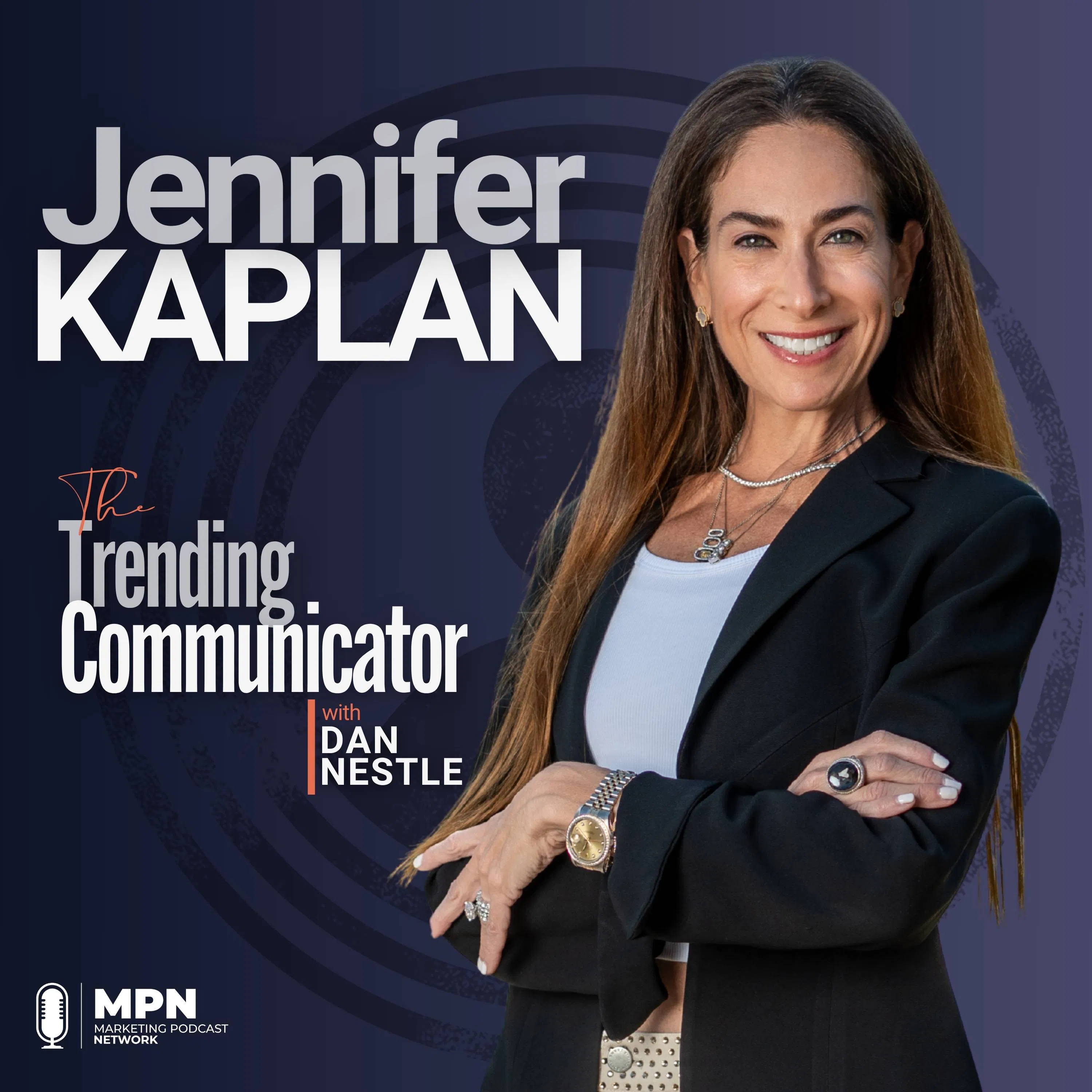


What if sustainable growth isn't about becoming the biggest player in the market? Agencies triple in size and lose their soul. They chase national footprints and abandon the community relationships that made them valuable. Meanwhile, regional firms with deep roots are building something holding companies can't replicate.
In this episode, host Dan Nestle sits down with Jennifer Kaplan, founder and president of Evolve PR and Marketing—Arizona's largest PR firm. Since 2010, Jen has grown to 28 full-time publicists serving more than 140 clients. She's earned Copper Anvil's 2025 Agency of the Year and PR News' Top Women in PR—but the real story is how she built an agency that's simultaneously deeply local and nationally sophisticated.
Dan and Jen explore why relationship-driven business is becoming a competitive moat in the AI era, the tension between AI efficiency and human authenticity, and what two decades of agency leadership teaches you about leading through chaos without losing what makes you special.
Listen in and hear about...
- Why local authority often delivers more impact than national vanity coverage
- Balancing AI tool adoption with authentic client and media relationships
- Building agency culture through purpose, consistency, and trust
- The power of niche specialization over broad service sprawl
- Leadership lessons from 20 years of agency growth—including when to stop trying to do it all
Notable Quotes from Jennifer Kaplan
"My mom would say that I was born doing pr, and it is something that I love so much because I feel like it's who I am. So when I talk to people, I do say, you know, look at something that isn't just a job." [00:04:07 – 00:04:23]
"With any trend, I feel in any business you have to be on it, you have to be aware, but don't lose your identity and don't let it replace things that it shouldn't replace." [00:11:19 – 00:11:34]
"You have to be in tune with AI, but I wouldn't let it take the place of so many wonderful things that we can offer as individuals and that are afforded us in, in the world." [00:12:45 – 00:13:02]
"Go be you. You know, don't let AI or all the things that are around us take away from who you are and lose who you know what makes you special." [01:04:02 – 01:04:15]
Resources and Links
Dan Nestle
- Inquisitive Communications | Website
- The Trending Communicator | Website
- Communications Trends from Trending Communicators | Dan Nestle's Substack
- Dan Nestle | LinkedIn
Jennifer Kaplan
Timestamps
0:00:00 Introduction: Rethinking Growth in Communications
0:07:44 Importance of Networking, Building Trust, and Relationships
0:13:09 Navigating AI’s Impact on Communications and Authentic Content
0:18:32 Evolve PR’s Niche Approach and Building Media Relationships
0:24:03 Local vs. National Recognition: Awards, Impact, and Credibility
0:31:17 Challenges of Speed and Building Relationships in PR
0:36:30 Integrating Traditional and Tech Approaches in PR
0:43:38 Measuring Success and the Role of Tools like AI in Agency Work
0:45:49 Purpose-Driven Work and Letting Team Guide Agency Culture
0:51:01 Agency Values: Neutrality, Team Dynamics, and Audience Focus
0:56:12 Leadership Lessons: Don’t Try to Do It All, Embrace Mistakes
1:04:02 Closing Thoughts: “Go Be You” and Staying Authentic
(Notes co-created by Human Dan, Claude, and Castmagic)
Learn more about your ad choices. Visit megaphone.fm/adchoices
00:00
Daniel Nestle
Welcome or welcome back to the trending Communicator. I'm your host, Dan Nestle. I've been watching something happening that makes me wonder if we've been asking the wrong questions about growth. We obsess over scale, like how to get bigger, faster, more efficient. But what if sustainable growth in communications isn't about becoming the biggest player in the market? What if it's about becoming the most deeply connected? I've seen agencies triple in size and lose their soul. Firms chase national or global footprints and abandon the community relationships that made them valuable in the first place. Except regional firms with deep roots aren't just surviving, they're thriving. They're building something holding companies can't replicate. Genuine community capital combined with sophisticated national capabilities. Well, today's guest has built Arizona's largest public relations firm by refusing the conventional growth playbook.
01:06
Daniel Nestle
Since launching Evolve PR and Marketing in 2010, she's grown from a small team to 28 full time publicists serving more than 140 clients. That's 15 years of compounding trust in a state where everyone knows everyone. You know, the accolades confirm it. Phoenix Business Journals, 40 under 40 ranking Arizona's number one PR agency, Copper, Anvil 2025 agency of the year, PR News 2025 top women in PR and people of the year. ASU's inaugural Hugh Down School Alumni of the Year. But what matters is she's built an agency that's simultaneously deeply local and nationally sophisticated, relationship driven and technologically forward. And that's rare. Well, we're going to explore what it takes to build something that lasts when everything's fragmenting. How you balance AI efficiency with human connection and what it means to lead through chaos and build a business without losing your soul.
02:03
Daniel Nestle
Making her debut on the trending Communicator, the founder and president of Evolve PR and Marketing. Living proof that the best way to grow is might be to stay rooted. Jennifer Kaplan.
02:15
Jennifer Kaplan
Jen, hi.
02:16
Daniel Nestle
Welcome to the show. How you doing?
02:18
Jennifer Kaplan
I'm excited to be here. I'm going to add this to the resume.
02:22
Daniel Nestle
It's worth it, I think, and it's great to speak to somebody who is really building something. You have built this with your own two hands, as my exon engineer uncle might have said. But it's really nice that there is a, there's a lot of optimism and positivity and growth in our profession where people might not necessarily be looking. And you don't even have to care about that really, because you know you're killing it in Arizona, you're the number one PR firm in the region, you know, and that. That is no small feat. I'd like to be the number one anything. I mean, you know, I'd like to be the number one PR firm in my house. Unfortunately, my wife kind of beats me to that, but it's great to see you here.
03:17
Daniel Nestle
And, you know, listeners and watchers are not going to see this, but, you know, I flubbed the intro like seven times. And I'm sure as a publicist and somebody who's really focused on the connections that people make in real time in pr, maybe you'll give me notes later about what to do about that. But thank you for joining the show, and I want everybody to get to know you first. So why don't we go through a little bit about who you are, your background, and how you ended up building the top firm in Arizona.
03:52
Jennifer Kaplan
Well, first of all, you handled those hiccups along the way perfectly because you didn't focus on them. You just kept moving and didn't show that you were flustered by them. So I think you were perfect. Well, my mom would say that I was born doing pr, and it is something that I love so much because I feel like it's who I am. So when I talk to people, I do say, you know, look at something that isn't just a job. And I know that's hard. I think of the analogy with Tiger woods when he was three years old swinging a club and was on that trajectory to be one of the, if not the top golfers in the world. And so I kind of had that mentality and at 30, had the opportunity to start my own business, come from a family of entrepreneurs.
04:47
Jennifer Kaplan
And I did study pr public relations. You mentioned the Huedown School. I went to asu, Arizona State University, and I studied communications with an emphasis in public relations because I did really feel like this was my. My mission and my passion. I just didn't know it would translate to having my own business. So I started my own business 20 years ago, evolved 15 years ago. I had a business partner for the first five. And hence, not that this applies to everybody, but no kids, no dogs, no cats, no fish, and just got married four years ago. So my. My company really became my identity. But not. I say that, not in a dysfunctional way. I just really, truly love what I do. I get up every day just as excited for whatever the challenge is going to be.
05:42
Jennifer Kaplan
And we did just hire our 28th person. So sometimes I'm like, wait, I thought were just like three or four and then next thing I know we're 28. But it's been an exciting ride. And the local market, because you mentioned aspects of the regional and the local, you build a reputation and I think that's really important. And a big part of that is obviously the reputation, the trust, the credibility that you can build among your peers. So we try to do that for our clients, you know, through storytelling and message building. But also getting involved in the community marketing is in our name. And I define that as community outreach and cross promotional opportunities. So what other ways can people get their name out there?
06:33
Jennifer Kaplan
And a lot of the things that I kind of promote within our firm, internally and externally, are who I am. And that's probably why I do feel so passionately about it. And it doesn't feel like work because I found that in my like 35 to 45 years old and I'm 50 now. So in those first 10 years ish of the company, I really got involved in the community and built my network and got to know people. So you can network in a lot of different ways. I got involved with Cystic Fibrosis foundation, some other organizations and some of that organically, some of it is, you know, people feel like it's not authentic if they're, you know, networking and. But you know what, at the end of the day an organization was getting money or getting volunteers or getting donations.
07:31
Jennifer Kaplan
So I feel that the PR is really important. Build your brand, build your reputation and also that authenticity in the community and marketing and you know, building networks that way is important.
07:44
Daniel Nestle
Yeah, I don't think that we should shy away from networking, so to speak. And it's funny how that word took on such a like tarnished reputation or tarnished meaning over the years. But what, you know, I don't think that, like, I don't think it's, it's a wrong thing, it's a bad thing. I think that, you know, if you're gonna be out there and talk to people, what is get, what's going to get you going to go out there isn't as important as what you do when you get out there.
08:18
Daniel Nestle
So if you're out there to network because you need to build your business or you want to build the connections that are going to lead to your business, well, you should be confident in the fact that, you know what, I'm bringing good work to these folks and plus I'm really interested in what they're doing. I mean, I want to be involved you know, I wouldn't say like go get involved with causes that you have no connection to, but it's, it's a lot of, it's just about where you land and not necessarily where you take off. I don't know.
08:45
Jennifer Kaplan
No, that's great. I agree with you. In my 20s, as I was navigating career path before I was starting my company at 30, I was at a company that in their training, they said people do business with people they like and people they trust. And here at 51, that saying from 30 years ago still resonates with me and still applies. And I think that it's really important to make those connections, build that trust. So whatever your brand or service or widget is, you, you make that connection. If you're like, you know what, I remember meeting, you know, him or her or whatever and I, they connected with you and you know, you build that connection, the relationship.
09:34
Jennifer Kaplan
And I really do believe it's kind of cliche, but I do believe that the relationships and who you know and what you develop along the way is so important. And I really can look back and reflect that's been a big part of how we built our business.
09:50
Daniel Nestle
It's, it's interesting how some things don't change and some things get even more important. We talked a little bit about or kind of referred to the age of AI and building a firm, you know, in this time of chaos and the challenges AI have for these kind of human connections. Talked about that on many shows. I don't know. What do you think about this? That is there a kind of advantage now to being a relationship based leader and a relationship based seller or business owner now when AI is. AI is not the thing, but AI is certainly accelerating digitalization and sort of siloed activity and loneliness and kind of working out on your own and not dealing with people in this age.
10:52
Daniel Nestle
Is that, are we going to come to a point where being a relationship builder is actually going to be a massive advantage? What do you think about that? I mean, I'm assuming that you're on board with that.
11:03
Jennifer Kaplan
I am on board with that and an advocate of that. I think that with any trend that we see, and I don't think that AI is a trend, but right now it's kind of in that mode as it's finding its different places within the world. With any trend, I feel in any business you have to be on it, you have to be aware, but don't lose your identity and don't let it replace things that it shouldn't replace. Don't lean on it in a way that takes away from that connection that we talked about or really your brand that people lose that not trust. But you know, when people like, oh, did you know, I, it makes me cringe when people say, you know, we'll ask a client to work on some, you know, questions for a byline or an article we're working on.
12:01
Jennifer Kaplan
They're like, if you could just go through and edit this, you know, because I used ChatGPT and I'm like, why are you even telling us that? Why did you do that? So, you know, you don't want to lose some of that. A few years ago, that doctor or lawyer or realtor or whoever, the chef, whatever that, whoever that expert was that were doing that piece for would never have done that. They would have, of course not used their knowledge, used their intel, use their experience to put that together. And we still would have edited and we still would have been supportive to craft it. But now I just feel like it's that barrier, it's that, yeah, that easy out. So I, I think that, but you have to be in tune with AI.
12:51
Jennifer Kaplan
But I wouldn't let it take the place of so many wonderful things that I, we can offer as individuals and that are, you know, afforded us in the world. And I can only imagine what it's like for kids because they're not going to know any different.
13:09
Daniel Nestle
You know, it's, that's a whole different kettle of fish. As my, as one of my friends used to say, the kids are. It's interesting. Gen Z is a. Is, is approaching this in a very different way. They seem to be wising up to the fact that they need touch grass. And I have two Gen Z daughters and they're not digital animals. They really aren't. And they're not really. They don't enjoy AI. They don't know anything really. Well, one of them doesn't really have any need for anything. With AI in her chosen path of being, of cosmetology, she's, you know, AI is not going to help her put somebody's nails on their fingers. You know, it's like, it may, she may come up with ways to use AI to create designs which would be fun for her, but she, that's not where she is yet.
14:00
Daniel Nestle
My other daughter is a senior at college. She doesn't, you know, she just likes what she writes better, she likes her own thoughts better.
14:07
Jennifer Kaplan
I think that's beautiful.
14:09
Daniel Nestle
I think that is fantastic and I hope it's a sign of something that's pervading that generation, you know, but there is that cognitive offload they call it, right, where just like the person who came to you with the chat GPT written crap came in and said, yeah, can you fix. I just wrote this in chat GPT. There's nothing wrong with writing something in chat gbd, but there's something very wrong with presenting it as a final version that represents your thoughts. And that is, you know, without putting in the time and effort to make sure it is great. Which means you gotta work and people don't wanna work, right? A lot of people just don't want to put in the time.
14:52
Daniel Nestle
I think our, you know, we PR people and Martin Comms people, especially those of us who've been in the industry for a while, we've got maybe a, I don't know, maybe it's a little bit of a parochial view about writing and about what we need to do. But we value the craft and the knowledge probably more than a lot of other professions. And that's kind of why I have hope for us as a profession is because we won't let bad quality and bad stuff get in the way of a good story. But I didn't want to jump into AI right away, but it's fine.
15:36
Jennifer Kaplan
But you like something you said, you know, as an organization, any business, I don't want to make it just about pr, but I mean, you have to. There's a balance between what is happening around you in your industry so you're not left behind and your peers or your competitors don't pass you up. And that's one way, you know, that we have stayed relevant is to make sure we're touching all the things but balancing without losing the personalization or the relationship, you know, or other aspects of what makes us unique. So I think that's really important for businesses to think about.
16:22
Daniel Nestle
It's exactly the stuff that no technology has been able to do for us. And AI, if you look at it just as a technology is certainly not going to replace that empathy and real connection, the person touch a shoulder to bring somebody up from the depths of their depression or give someone a call when you haven't heard from them in a while or, you know, that's, you know, AI doesn't, is not going to be able to make those interesting and important human, you know, human kind of foibles. Maybe I don't know what we call them, but there's just, there's a lot there to unpack, though, with relationship building and building a business in the, in right now amidst all this.
17:15
Daniel Nestle
And when we're on, you know, when we look at the guests of the trending communicator, things I've, that we've talked about, a lot of it is future forward, technology forward. And some of sometime we need to kind of take a step back and say that, yeah, part of the future, part of being future forward is to recognize what is really working well and what we have to double down on or really work hard on or not let go. And I think you're firm and the things that you do kind of represent part of that. And what I was, what I wanted to know. First of all, back up a little bit because comms is so broad. Right. Communications, really broad. Pr. Sometimes people use the term interchangeably PR and comms. And I find myself doing that all the time just to eliminate confusion.
18:07
Daniel Nestle
But you define PR like you have a very kind of specific area that you focus in. And I'd love for our listeners and viewers to know like how, where your area of focus is. Right. So that we can understand probably why it is that relationships are super important.
18:32
Jennifer Kaplan
Well, this resonates for me to share as I answer your question. My mom said to me years ago, get rich in your niche. And so while marketing and comms are a big umbrella and a lot of things can fall in it, and how you go about what falls in it can be so different. And so it was really important for me to go about our building of the company in a very specific way from that rich in your niche. Because I want someone when they think of pr, to say we need to call evolve. Not. Well, I think they do pr. I know they do a little of this and some of that. Yeah. But just give them a call, see if maybe PR is also something they do. So, you know, approaching it in a very intentional way.
19:27
Jennifer Kaplan
So it's like, oh, yeah, you got to call them. That's what they do. So in general, from a tactical standpoint, you know, we get our clients out in the community via tv, radio, print, online, obviously over many years, influencers, podcasts, other things kind of fall into that category. But, you know, doing it as part of our clients team and really looking at the media and the client as the same, because we need the media. I would say we could have as many clients in the world, but if we don't have the media relationships, it doesn't even matter. So going back to the relationships and the trust and just making sure that we're consistent with how we're communicating with them is really important. So, yeah, I mean, we're just very systems driven to make sure that we're also staying on point and consistent.
20:29
Jennifer Kaplan
When you go to McDonald's or Starbucks, you want to have the same meal no matter what country you're in. And so that's another thing that we try to do is be consistent if someone's out of the office and someone's backing them up or they're sick, that you're still going to have the same experience, you know, like, whoa, when is Sally coming back? She was so much better to work with. So there's a lot of ways that we go about that, you know, with all the different things. I'm interesting, focused on our craft, being consistent, looking at all aspects of the PR and making sure that we're systems driven.
21:11
Daniel Nestle
So it's like maybe the second time in a few weeks that I may have to be eating some crow. I mean, I've gone out there and said media relations is dying and we need to let it go. Right. And here I am talking to a few folks you. And I think it was it, was it Barry Cohen, like somebody I was speaking to recently about like how they are really focused in media relations and killing it. Like killing it. Not, I'm not talking about financially, although I'm sure that follows. But it's really about getting a message out and getting their, making their clients super happy and seeing results that matter.
21:50
Daniel Nestle
Now, you know, I'm going to weasel a little bit here and say, look, when I talk about, because this is true when I talk about media relations, I'm generally talking about the fact that too many companies are putting too much money into a very small basket that they have literally no chance of getting coverage or appearance. And when they do, it doesn't go anywhere. They don't do anything with it or it's a flash in the pan or, you know, whatever they're. And they're getting judged on that. Three, three lines they get in the times, you know, whereas instead of trying to go and chase media attention, you should earn attention across the vast scope of channels that we have available to us. And so in some ways it's violent agreement what they're doing.
22:38
Daniel Nestle
Like, it's not chasing the top tier stuff, it's finding the right fit for the message. And for the story and then looking at strategically what media matters for this. Who's, who's the podcaster that's talking to this audience? You know, what are the digital channels that we can get? Like the trades, what, what trade magazines, so to speak. Right. The, the websites and blogs, like, what are the ones that we should be in? So all this actually is essentially media relations because you need to have a relationship with somebody to get covered, essentially, for the most part. Right. So I'm not sure if I'm sort of giving more color, defining what you're doing properly, but I just want to put that out there that listeners, viewers, this is not the kind of media relations I'm talking about that should be dying.
23:36
Daniel Nestle
This is the kind of media relationship. Jen's media relations is in service of the strategies of her customers and her clients. So I don't know how you feel about that differentiation between the media tiers. And if you're ever forced or ever asked to go chase down Wall Street Journal or something like this. And how do you react to that?
24:03
Jennifer Kaplan
Well, not that Oprah's been off air, off the air for a long time, but for a long time it was, can you get us on Oprah? And so there is always that big shiny, you know, outlet that people want or that media opportunity. You know, it depends on the business. When you look at that really big opportunity, I'll say to my clients here, let's say in the local Phoenix area, do you have all the clients that you could have here? Because Wall Street Journal Today show, whatever it is great, but where's your audience? And is that going to help monetize your business? If you're a naturopath and you want natural national recognition?
24:50
Jennifer Kaplan
I mean, yes, I guess people might fly in for your IV therapy, but the chance of them having one in their city or a lot closer to them nationally is pretty great. So, yeah, I drive that home a lot. And you even said that sort of in the intro about, you know, recognizing the local and regional strength that a company can have. And then if there are those national opportunities, then that's great. But even with just what we had with these awards, I mean, getting some of these national awards and going to New York and accepting the award, my client here, it goes right over their head.
25:35
Jennifer Kaplan
Yeah, but if I said to them, Phoenix magazine, which is one of it, sold at the grocery store at the checkout, you know, it's a very well revered, higher end glossy publication, they do their best of every year and we got Phenix Magazine, best PR firm. Now that to me is more the gold. And that's just the local publication here. So, yes, I think that people get a little bit excited. It's shiny and it's big and you can tout it. But where is the impact going to be greater? Is it going to be more in a local, regional, even hyper local? We know, with influencers, micro influencers, you know, are even more impactful because who they're talking to, the demographic, you know, the end result could be so much more powerful than getting the national.
26:34
Jennifer Kaplan
Now if I could say, oh yeah, I got this national award, blah, blah, I can say it, of course, but I don't think it's more exciting getting the local awards then. And, and you know what, it does help court for us at least some of the national brands when they're looking at Arizona companies.
26:58
Daniel Nestle
Right.
26:58
Jennifer Kaplan
Oh, that is the one that Phoenix or Arizona recognized. It's perception, you know, and, oh, well, we need to call that firm because they're the ones that got no number one Phoenix, blah, blah. That national award in New York, I was one of maybe 12 others across the US that got, you know. Yeah, it's not as, it's, I can't tout it as much.
27:24
Daniel Nestle
I mean, it's a credibility marker, but for sure it's not. But, you know, you're right. It's not going to be like causing hordes of customers to come chasing down your doors. We can only work with people who have this award. That's never, that does not happen. You know, when you're a big agency and you know, you win these awards, it starts to just become a matter of numbers. We have, you know, four quadrillion awards at Edelman or at Weber or whatever, Right?
27:52
Jennifer Kaplan
Yep.
27:52
Daniel Nestle
And, you know, not to knock them, they do great work. But it's just like that becomes an important thing when you're competing at, you know, with those kinds of companies for these like, big national marketing communications teams that are only looking at those companies to begin with. Like, they're not, they're under, like, nobody get, nobody ever got fired by buying IBM. People say, right, it's that kind of thing. Like, it's like, well, we have a mega budget. We've got a lot of money. Who are we going to talk to? We're going to talk to these five firms, right?
28:24
Jennifer Kaplan
Yep.
28:24
Daniel Nestle
And then they, you know, when it comes time to doing, to do something local, you Know, it's. It. It's a very different story.
28:33
Jennifer Kaplan
Sorry.
28:33
Daniel Nestle
Just.
28:34
Jennifer Kaplan
Even when I'm traveling to the point of these businesses, not PR firms, but restaurants and other businesses, if I'm traveling to a city, I want to go the number one Italian restaurant, number one Chinese restaurant, number one.
28:48
Daniel Nestle
Yeah.
28:49
Jennifer Kaplan
Mexican restaurant. I know there's probably Olive Garden that could be my Italian, because I know them. I'm just, you know, like, nationally. But I want to go to the one that's in that city that's recognized. So.
29:03
Daniel Nestle
Yeah. Who's getting into timeout New York? And do you think, you know, do you think that the, you know, the big five or six global PR firms are spending their time with a restaurant? Like a single restaurant owner, like some. Some. Somebody who bootstrapped their way into. Into a junky joint and, you know, somewhere in Brooklyn and has just by virtue of sweat and talent, is one of the best. I mean, that's where, you know, that's where they're not gonna. You know, they're not gonna be youth calling up and a. Like a Fleischman. They're gonna be, like, doing whatever viral stuff they can do and getting in, you know, so to have more options for them, to have publicists and to have people that they can rely on to keep that momentum going, you know, and to get them noticed, I think is. Is.
29:55
Daniel Nestle
Is probably, if you look on, in aggregate, of far greater value than everything that the large firms are doing put together. I would. You know, I'm just guessing. I mean, I'm certainly not a math guy. I'm a PR guy. But, you know, I did want to ask, though. It's like you're dealing with these. With human timeframes, getting folks onto TV and into podcasts and local media. But there's a accelerated pressure of speed now of getting things done faster and faster. And people say, yes. Oh, yeah, but that's all the big cities or the small cities or that's an east, west thing? I don't think so. I think it's everywhere. I think everywhere there is a. An increased pressure or an expectation that's going to get done fast. So how have you adjusted your firm over the years for this? Like, the.
30:54
Daniel Nestle
The whole methodology is the core methodology, if you want to call it that. Building relationships is not changing, but speed is typically anathema to that. Speed tends to degrade or make it more difficult to build relationships. So how. How have you been dealing with that?
31:17
Jennifer Kaplan
Well, there's so many more touch points that we can. That we have to build those relationships a little bit quicker. You know, you can even look someone's background up and when you know, whether that is on Insta or LinkedIn, like we didn't have those tools back in the day to be able to say, oh, I saw that you're so instantly we're connecting on something because I'm able to get all this background information on you. But yeah, I think our society. I even noticed sometimes when I'll say to someone on my team, did you hear from, you know, so and so reporter or whatever about xyz? And then I think to myself, if they did, they probably would have told me.
32:00
Jennifer Kaplan
Yeah, like, yeah, it's not like they're keeping, you know, I'm going to wait till Jen asked me and then I'm going to tell them. Yes, surprise. I did hear from the producer her. But I think just our mentality in our society, you're right across the world is that timely, fast, need things now kind of thing. So I feel like we do have an element of that in what we do that we need to know who the new writer reporter is or what beat they're covering or what they're up to. Because if we know before, you know, then we can get our pitch, then maybe we'll connect with them before you. And if that's kind of answering your question, I, I do feel like on all levels there is that sense of urgency.
32:52
Daniel Nestle
Yeah.
32:53
Jennifer Kaplan
But then you have to get the information from the clients in a timely manner. So there's then there's that whole component too.
32:59
Daniel Nestle
Oh, for sure. You know, I mean, do you have. You had to change the way that you do intel. You just talked about different touch points and things like this. But you know, to get in front of a reporter or producer or somebody who has the ear of the booking people, you know, like is that. And you know, with the kind of proliferation of gatekeepers and so on. Like how has your like approach changed to that if you can get into some of that? Because I think. And do you use any like digital tools or any measurement or any kind of what signals are you looking for when you, when somebody, when there's a change like that?
33:43
Jennifer Kaplan
Yeah. So I would look at it sort of locally and nationally. For us locally, we have such a pulse with the number of people on our team and the number of clients we're pitching. If someone on our team gets a undeliverable or out office, even as much as an out office, we're on the group. Oh, Susie's, at Office Tom's, you know, not there anymore. The new person is Chris. Whatever. So locally, it's easier for us to keep a pulse on all that. But nationally for sure, we use Muck Rack and we use a lot of other tools for social. We use Hype Auditor, we use some other. Just not in that realm, but we use other tools.
34:30
Jennifer Kaplan
Tools in general like quoted and critical mention, things like that, all encompassing, will kind of give us that information, curate lists, build, you know, build our contacts. And sometimes it really is social media where you can find different writers and reporters and message them and drop in their DMs, but, you know, but also see what kind of stories they're doing. Because back in the day, you know, it was just like, well, they're writing about this. I keep referencing back in the day so much.
35:10
Daniel Nestle
That's okay. I was there.
35:12
Jennifer Kaplan
Times have changed.
35:13
Daniel Nestle
That's a day I'm familiar with.
35:15
Jennifer Kaplan
Yeah, well, and the media requires so many of their writers and reporters to share and they want to share the stories that they're doing. So we can see, oh, they're writing a lot about this. And therefore, you know, I think we could pitch them. Yeah. So combination of the tools that we're subscribing to and invested in and then our own research, watching, listening, know, reading to figure it out. But I feel like you have to move pretty fast. And the client wants us to move fast. Yeah, we got to get this out there. You know, we need to be promoting this. We need to. Yeah. I mean, I love when I get our events in two weeks. Can you like two weeks. So then we're forced to work fast. We're forced to be putting the media under the wire too.
36:13
Jennifer Kaplan
I know it's in two weeks. We'll really like to cover it. I don't know if we can get, you know, then you become. It becomes like this whole dance. So we don't like being too hurried and rushed and trying to figure out information really fast. But sometimes it just happens that way.
36:30
Daniel Nestle
Yeah, it's like, but what you're talking about the way that you're doing things, it's like it's very easy to get this impression that pr, in the sense that you talk about pr, like public relations, placements, media relations, you know, getting the word out about people to the people who need to hear about those people. It feels like it's an old thing. Like, it feels like it's like, okay, like you start to throw words around, like, oh, that's like traditional this or traditional that. But you just talked about the variety of tools that you're using and the kind of different, you know, ways that you're leveraging technology to get the intelligence that you need to make the right decisions or to really tailor your pitches and your activities and your content creation for your clients.
37:21
Daniel Nestle
And, you know, I think it's really critical to get, to have that hybrid approach, you know, to really merge the old and the new, because you shouldn't just junk what's working. Right. And there's a question here somewhere, believe me. It's like, I just, I wanted to kind of understand, though, like, as you hire people and you bring them on into your firm and you're building your agency out, like, how do you approach the, I guess the. The upskilling education, the kind of keeping your people where they understand that they're at the top of their game. Right, because you're using these different tools or you're working with technology in this interesting approach. How do you kind of embed that in your culture? Like, is there some. Is there some way that you are, I don't know, demanding of your employees? Or is there some requirement?
38:30
Daniel Nestle
Or is there a, or is there a value that you have that it's like, no, we need to be on top of the tech. You know, how do you make that happen?
38:38
Jennifer Kaplan
Yeah, well, generationally, again, we talked about this a little bit earlier. I think that generationally, they embrace the tech.
38:51
Daniel Nestle
True.
38:52
Jennifer Kaplan
So there's that, But I feel like they also love to read a book, you know, and not on a Kindle. Do those things even still exist anymore?
39:02
Daniel Nestle
I got one, man.
39:03
Jennifer Kaplan
I'm just kidding.
39:04
Daniel Nestle
I'll give you a good reason to get a Kindle. I'll give you a good reason to get a Kindle in a moment.
39:09
Jennifer Kaplan
You know, there's the book, and maybe people are listening to the book, but, you know, they still want some of that tangible. And, and you said that with your daughters. And so I feel like there is that balance. And we invested in Copilot, which is a tool within Microsoft, and it integrates with Word and Excel and with different things. So it's nice to have some of that. I just don't want to take away from the realness, know that we've been talking about that it can lose. But I do feel like they need to be efficient and they're busy and they've got all their clients and they got all their Clients that are demanding things from them. And so without providing those tools, it might slow them down because we just are in that society of bigger, better, faster, stronger kind of thing.
40:10
Jennifer Kaplan
So I want to empower them and give them some of those tools while not taking away, you know, the unique individual elements that they bring without the technology.
40:22
Daniel Nestle
I mean, it's also kind of hard to prove the return on an investment from a client if you're not measuring what you're doing. And you know, if you can't show that you are, that you have some specific advantages that other, you know, other firms or other competitors or other people might not have. And you know, really what's the benefit of working with a PR firm rather than just not do it at all? You need to have the numbers behind that. And I think, you know, for that you need a specific set or a certain set of tools. And there's different ones. And you mentioned a few of them, but like, nobody can wing it just with a phone and a Rolodex and some gumption and elbow grease, you know, that doesn't work anymore. Right.
41:10
Daniel Nestle
You have to really be, I think on top of at least some of the technology, you know, and you mentioned copilot, you know, great for. You're talking about improving efficiency and everybody wants that, especially when you have more demands and you need to get things done faster. You need to be more efficient, productive. You know, I think there's a lot of power in the research capabilities of AI and in the sort of like, you know, in the like kind of co. Intelligent think. Co. Thinking. You know, my language is escaping me on this afternoon, but in the sort of mutual conversations that you have with AI, that kind of challenge you.
41:57
Daniel Nestle
And if, I mean, of course you have to use it properly and you have to want that and go and purposely do this, but getting, bringing yourself up to a higher level of understanding and knowledge than you would have before, you know, but very few people actually do that with AI, you know, and by the way, before I forget, the reason why it's good to have a Kindle. Now is AI related. Of course. Right. But I just learned about this recently and I forget exactly what it's called, but with Claude especially, and maybe a couple other platforms, but definitely with Claude, you can connect your Claude to an app that basically takes all of the highlights that you've ever done on Kindle over the many years you've had a Kindle.
42:44
Daniel Nestle
So if you're a person who reads business Books and highlights stuff all the time on Kindle. Then you get this app and you throw it into, you connect it with AI and then suddenly you're like, find me 14 quotes that I've highlighted. That's from these great business leaders that are going to support my speech today. You know, it's a, it's incredible. Now that said, ask me how many times I've highlighted anything on Kindle. The answer I'll give you quick. That's right. It's goose egg, big zero. Because I don't read business books on Kindle. I like to look at business books and kind of go through them and sticky tape, you know, put stickies in them. Because 90% of the time when I'm reading a business book. So I'm gonna talk to somebody about it now. So, you know, old school.
43:31
Daniel Nestle
But I'm thinking of changing my ways, you know, for that reason. Because it's really like, I mean, the things that you can do now. So not saying go out and get.
43:38
Jennifer Kaplan
A kid, probably developed by some 22 year old.
43:40
Daniel Nestle
Oh, for sure. Speaking of AI, viewers may have just noticed that my camera is switching all over the place because I accidentally switch. I got a new camera. It's AI powered. It follows me. If I raise my hand, it activates. And when I raise my hand again, it will deactivate. So I was flopping my hands around and it activated on accident. But now viewers will no longer get motion sickness watching me. Sorry about that. Smarter.
44:10
Jennifer Kaplan
You know, it's just. And so when you, I think as a business you have to incorporate elements of it. You have to, but you have to know your lane and know the boundaries where it just loses.
44:27
Daniel Nestle
Yeah.
44:28
Jennifer Kaplan
You know, the specialness of a business or an organization, it just becomes too crafted and too manufactured feeling.
44:38
Daniel Nestle
Yeah, it's interesting you said that because you've mentioned now this whole idea of specialness of the. And we'll just call it the uniqueness of being human or these kind of relationships and the, you know, what makes us really, you know, and you've done through your career, certainly at your, with the clients you work with now, the power of purpose and the importance of purpose tend to be a driver for what you do. Now. I think a lot of people pay lip service to this. Companies and organizations say that they're purpose driven when sometimes they're not. Sometimes they are, but often they're not. And nowadays we talked about those crazy gen zers. I mean, forget them. The millennials and the gen zers are all about purpose. Right. So, so what, you know, how have you been able to maintain that, like your focus on purpose?
45:36
Daniel Nestle
I mean, how does it connect with your business and with, I mean, with community? It kind of makes perfect sense. But what is, how is that part of your agency's DNA?
45:50
Jennifer Kaplan
Well, what's interesting is, and I mentioned how community and having that purpose was so important to me starting my career, I actually let my team guide a lot of that because I want them to feel a part of that purpose and me sort of driving it and dictating it. And as I've grown up and evolved in this journey, I don't feel like I need to manage and control it as much. And it also, you know, I say to my team, feel your power. And I want them to feel their power and allow them to kind of embrace where those opportunities are. Obviously it has to be in line with who we are and what we're doing as an organization.
46:43
Jennifer Kaplan
But I feel like I want them to get excited about some of that and I'll jump on the train and if I don't or I disagree for some reason that it's aligned with us, then I'll say something and share that. But if they have an idea of something that they want to do individually or for the organization, I want to support that because I feel like I've had a lot of my moments. And again, maybe that's not having kids and seeing them as kind of the kids and on their path to become and create their identity.
47:23
Daniel Nestle
I think that's almost human nature. Whether, whether you have kids or not, you just sort of, you get to this point in your. Well, I would hope that you get to a point in your career and in your, in your life where you're just like, you know, I kind of want to transmit my knowledge. You know, there was, there was some study and I'm going to get in trouble for this, I'm sure, but there was some study about. I'm going to get, I'll get it generally right, directionally. Right. I might get to some factually wrong. Just warning. But why, you know, why women cease to be able to have children at a certain age. Right. And then, you know, but they live longer. Right.
48:05
Daniel Nestle
Evolutionary biologists have looked at this and like some people, some of, some have said it's a mystery, but the recent. Well, what I've seen recently, and maybe it's not recent thinking, is that, well, it becomes the job of those, of that part of our society to then be focused on transmitting knowledge. Right. Transmitting knowledge is baked into our DNA. So if you're past, you know, if some jobs are over now you have time to devote to nurturing and transmitting. I don't think it's a matter of having kids or not. I think it's baked in is what I'm saying. And, and not that you're, not that you're past certain age. Like I said, I can get in trouble for this.
48:49
Daniel Nestle
But, but I think, you know, I think it's fascinating that we really want to be passing on knowledge and it's not limited to men or women. I just, I just think that in our careers as we get, for as we go on, we want to do that and maybe that helps us. I don't know. You're making me think about this. Maybe that helps us to latch on to, or to support the causes and the, or the purpose driven activities of, you know, the youngsters to, you know, to paint a broad brush.
49:26
Jennifer Kaplan
I agree 100%. I don't know why this popped in my mind when you said that, but almost like when parents become grandparents, they're like, oh, it's so different. It's so, you know, it's so much better. And yeah, they joke about that. I get to return the kid, you know, they're, to their child, their parents, the child's parent, which is their kid.
49:52
Daniel Nestle
Yeah.
49:53
Jennifer Kaplan
But I think it's also to what you're saying, you know, it's kind of like a rite of passage of I've been there and I'm sort of passing the torch a little bit, if you will.
50:07
Daniel Nestle
That's kind of, it's. I think, I don't think everybody's like that though. I think some people, you know, are really genuinely believe that it is their job to be, you know, to, to lift up those who are coming, be coming after them. And there are those who are just like, no, Scrooge McDuck, I'm going to hoard all my gold. And you know, but I don't think you can be successful as a, certainly not as an agency owner and certainly not as a leader as Scrooge McDuck. I mean, you know, you can be Elon Musk and be. And be whatever you want to be. Cause you're inventing things and building things and whatever. You don't care about people and you're still going to make, you know, a trillion dollars.
50:48
Jennifer Kaplan
But yeah.
50:49
Daniel Nestle
When we're, when people is your business. Right. You, you can't behave that way and you've built your firm that way. It seems like, you know, which kind of makes me think that you're talking about the perp, like purpose. Have there been any causes or purposes that you've told your. And we don't really get political on the show, but have there been any times where you can remember telling. Telling your staff like, we're not doing that.
51:14
Jennifer Kaplan
You know, I mean it politically for sure. And it's actually not, of course, you could say, well, yeah, we don't want to talk about politics. It's not even just that. It's also because we work with so many clients.
51:29
Daniel Nestle
Yeah.
51:29
Jennifer Kaplan
That I don't want it to be polarizing to a client or to the media. So even if I sat around the table with my team and we said, okay, we're going to love each other, but let's all say if we're Republican or Democrat and it was in that room.
51:45
Daniel Nestle
Yeah.
51:46
Jennifer Kaplan
That's different.
51:47
Daniel Nestle
Right.
51:47
Jennifer Kaplan
It is that external. Like I said at the beginning, like I'm always thinking with that PR hat for us as well.
51:55
Daniel Nestle
Yeah.
51:56
Jennifer Kaplan
You know, whether it is how we're positioned and building that trust and brand and relationship. So that is one thing I think, you know, some people aren't pet people, some people aren't kid people. And so I always want to make sure that we're Switzerland. So if we're giving back or we're doing something as a group that everyone feels a part of it because.
52:24
Daniel Nestle
Yeah.
52:25
Jennifer Kaplan
Our culture is really important and everyone's really close, which is so special.
52:30
Daniel Nestle
Yeah.
52:31
Jennifer Kaplan
And very unique, especially where we do have males on our team. But the industry definitely.
52:37
Daniel Nestle
It leans.
52:38
Jennifer Kaplan
Attract more female. Yeah. Female dominated industry. And everyone gets along.
52:43
Daniel Nestle
And that's amazing.
52:45
Jennifer Kaplan
Beautiful. Yeah.
52:46
Daniel Nestle
I mean, you can look at Gladwell and say you're safe until around 150, you know, then. Then you're going to start to get tribal.
52:53
Jennifer Kaplan
Yes.
52:54
Daniel Nestle
It's unavoidable, you know, but it's. But for PR people, I mean, we're generally, you know, issues educated, critical thinkers. You know, I would say that a large swath of our profession really do lean in one particular direction. So it's hard to, you know, to be contrarian sometimes if you have, you know, opposing views politically or, you know, if you believe, you know, that something about the sanctity of media relations and you want to go out and say, no, media relations is Dying like me. You know, you're going to face some flack. But we do remarkably hold it together, I think, as a group. And, you know, I, I do feel that your approach with, you know, being Switzerland is. It's what I tell people all the time who have those who have a. A kind of heterodoxical. Or is that a word?
54:03
Daniel Nestle
A heterodox client base. Right. And when you're dealing with any issue or when you're dealing with. When you're making any kind of move or any decision or anything you do, you know, if you're not thinking of your audience and your clients, you're gonna get. You're gonna land into a hotspot. Now if you're, if you start a company and your values are like, from day one, this is who we are, blah, blah, then stay that way. Do that. Do what? Do what your values are.
54:33
Jennifer Kaplan
Own it. Yeah, yeah.
54:34
Daniel Nestle
And, and don't. But don't try to shy away. You know, you need to. You need to really stand for what you stand for. And maybe right. You may be wrong, but it, you know, in. It's about perception at that point. I think you're right. One, we're getting close to it, but I wanted to just hit one more topic with you, and it's. It's not that often, you know, that you have. That you meet somebody who has been, well, I mean, born to love pr. I mean, I can. Had this image of you at age 3, eating paste and cutting out newspaper clippings, but, you know, that's a.
55:16
Jennifer Kaplan
Were you doing that most talkative in high school too?
55:19
Daniel Nestle
Oh, you did? Okay, well, yeah, well, okay. Kind of. Kind of makes everything fall into place. But, you know, I mean, I didn't. I didn't set out to be a PR person or a comms person. I mean, I don't know what I set out to be. I just ended up being a decent writer. So I sort of went that direction. But then, you know, to have built your own firm, to have run it consistently and successfully now for two decades, grown to 28 people and just. And you know, I have no reason not to believe that they're happy. That they're not or that they're happy. I have no reason to believe that they're not happy. You have to watch those double negatives, you know?
55:58
Daniel Nestle
You know, that requires not just a love for pr, but like a love for leadership or kind of a natural or learned tendency to be a leader. So looking at where we're going in the future. You know, we're in chaos. Everything's fragmented and fractured. And I've used these words all the time. AI, this AI is going to replace this. AI is not going to replace that. You know, we're going to discover new roles that never, we never thought of before because of AI. All these things are happening at once. How do you lead in some, in a situation like that? I mean, what are the lessons that you would give to the up and coming people or to even leaders today who are struggling? Whether you're a manager or a leader or a CEO, what have you learned? What can you share?
56:52
Jennifer Kaplan
I would say not don't try to be and do it all. And I had a lot of opportunities to do that, and I feel like the times that I did it was a misstep. So when you're seeing all these things come your way, maybe run or lean into some that maybe are more comfortable for you or bring out some strengths, not just doing it to do it or overextend yourself because you'll either crash and burn or you won't be as effective. But yeah, that's a really good question. I like that question a lot. You know, it's okay to make mistakes and, you know, decisions that maybe you're regretting because I don't, I, I'm okay with that. But I would say, you know, don't try to do all the things. Yeah, that's it.
57:59
Daniel Nestle
It seems like a simple formula. You know, I, I get this feeling, having never worked with you before, but I get this feeling that you kind of, you get back what you're putting out there, you know, like, so you emanate a certain type of vibe, let's say, and everybody picks up on that. I'm not saying you can fake it. In fact, probably the opposite. But if you are, if you approach things in a certain way, then the people around you are going to either model that or run away. You know, so it seems like you have a decent kind of, you know, like, take it in, understand it, move forward, like leadership vibe. Am I off?
58:56
Jennifer Kaplan
Yeah, but I wasn't always that way.
58:58
Daniel Nestle
Oh, really?
59:02
Jennifer Kaplan
But it's definitely been a lot of growth and a lot of learning and thank you for saying that and sharing that. And I do want to be that way. And I definitely know that in the last seven, 10 years I have been. But maybe those, you know, starting in my 30s was a fake it till you make it.
59:23
Daniel Nestle
Oh, yeah.
59:25
Jennifer Kaplan
And then I think hitting, you know, 40. The last 10 years have been a much different journey. Way more peaceful. Yeah. Being this way and leading this way than the other.
59:39
Daniel Nestle
How much of that is confidence, you know, or.
59:43
Jennifer Kaplan
Or I think it all is. Because if you're faking it, you better be confident.
59:47
Daniel Nestle
Oh, sure.
59:49
Jennifer Kaplan
You're in. In the mode that I'm in now, you have to be confident in order to empower your team and let things sort of be the way they are in certain situations.
01:00:01
Daniel Nestle
So, yeah, I had a guest and she's going to never forgive me because I just. Her name just completely slipped my mind who wrote a book called, like, Make It Don't Fake it or Don't Fake It. Like I will put it in the show notes properly and apologize on LinkedIn for, you know, and I'm just looking behind me to see if I can find the book because it's, as you can see, it's a mess there. But, but yeah, like, it's, you know, her advice and she built a PR firm in Silicon Valley in the, you know, the 90s and caught on to the first dot com, boom and bust. And, you know, her. Her thing was, you know, like, if you fake it, you're gonna get caught. Right. So she was more about the act as if, you know, act as if you really.
01:00:56
Daniel Nestle
This is a nuance there. And. Oh, man, believe me, I'm gonna remember as soon as we. As soon as we stop recording, I will. Her name will come right back to me. But I will share it.
01:01:09
Jennifer Kaplan
Yeah, I want to know.
01:01:10
Daniel Nestle
Yeah, she was, you know, she's still. She was at. I want to say, Finn, she had her own firm, sold it, and then, you know, worked at the acquiring firm for a little while and then went out on her own. And boy, oh, boy, she's. Yeah, she's going to be with me.
01:01:33
Jennifer Kaplan
She's taking her lessons and, you know, sharing it with others. I love that.
01:01:38
Daniel Nestle
I mean, this was. This was several. This was years ago, before I had the. Before I before I was even, you know, before my podcast was rebranded as the trending Communicator. So I'm going to throw that out as a. As an excuse. It's been a while, but. But look, I mean, I think there's a lot to that. But fundamentally, though, I mean, you know, it sounds like you learn from mistakes. You, you. The riches are in the niches, as you said. Do what you do well and focus in there. I think those are learning lessons for everybody. And in the age of AI, you know, I don't think it could be even more important to do exactly that. AI is really good at helping you fake things. And I think you'll get caught. I mean, I think you're gonna get caught out.
01:02:23
Jennifer Kaplan
You know, so you're in that presentation or that meeting and you're like, what did I say in there?
01:02:31
Daniel Nestle
Yeah, secretly recording with your AI device. And you run it, run back home, you run that, that transcript and say, oh, okay, that's what I said. Right. I know what's going on. You know, the, the struggle I have with being such an AI freak or you know, aficionado or user or some people say a leader or expert. But the problem I have is just managing the sheer volume of things that are coming into my head. Not that's, not that are being manufactured on my behalf, but that I come up with. And you know, I sincerely hope that everybody who has a chance to dig into working with AI really give themselves freedom to roam mentally and you know, let your innovation inner innovator and your curious innovation self really fly with it.
01:03:35
Daniel Nestle
And you know, it could send you down a lot of rabbit holes. But, but don't let it go so long that you forget how to lead. So, or how to connect and relate with people. Right. So on that note, Jen, is there any last words that you have for our listeners and our watchers or viewers to, to take us home before I actually take us home.
01:04:02
Jennifer Kaplan
I could throw one out there that sticks with me that my mom. Another ism from my mom. Go be you.
01:04:11
Daniel Nestle
Go be you. My mom does the same thing. Oh man.
01:04:15
Jennifer Kaplan
You know, don't let AI or all the things that are around us take away from who you are and lose who you know what makes you special.
01:04:27
Daniel Nestle
Yeah, that is very important, probably the most important thing you could do. Just be you be you do you. And I don't think I could beat that or top that. So, so I will tell our listeners and our watch and our viewers. You can find jennifer kaplan@evolvepr and marketing.com on LinkedIn. Of course there's a lot of Jennifer Kaplan's on LinkedIn. So just, you know, look for the one in Phoenix who runs an agency and you're probably going to have the right one on Instagram at same thing Evolve PR and marketing and of course right here on the show which will live forever in digital eternity for anyone to see in here.
01:05:12
Jennifer Kaplan
Love it.
01:05:14
Daniel Nestle
But Jen, thank you so much for coming on. This is awesome. I'm so glad to meet you and if anybody's ever wants to do business in the Phoenix area or in Arizona or in the west or maybe even in the greater United States of this Americas and really wants to get excellent good relationship based publicist PR assistance help advice, reach out to me.
01:05:41
Jennifer Kaplan
That's my, you're the best.
01:05:42
Daniel Nestle
That's my feeling. All right everybody, thank you very much. Thanks Jen. Good to see you.
01:05:47
Jennifer Kaplan
Thank you.
01:05:54
Daniel Nestle
Thanks for taking the time to listen in on today's conversation. If you enjoyed it, please be sure to subscribe through the podcast player of your choice. Share with your friends and colleagues and leave me a review. Five stars would be preferred. It's your call. Have ideas for future guests want to be on the show? Let me know@dantrendingcommunicator.com thanks again for listening to the trending Communicator.